Application Guide
For cast iron components processed on multi-axis automated grinding equipment, wheel selection should be based on the complete grinding process rather than on wheel size alone. Material characteristics, workpiece geometry, stock allowance, equipment capability, operating conditions, surface-finish requirements, and replacement frequency all influence the suitability of a grinding wheel. UHD Ultrahard Tools provides vacuum-brazed diamond grinding wheels designed to support high-precision and stable automated grinding applications in the metalworking industry.
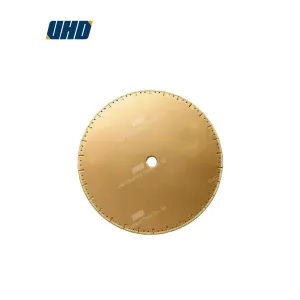
A vacuum-brazed construction securely fixes diamond particles to the working surface of the wheel. This grain-retention approach can support wear resistance and a longer usable service life compared with conventional electroplated wheel configurations, depending on the material, machine settings, coolant conditions, and application requirements.
For automated grinding, consistent abrasive retention is particularly relevant because the wheel must maintain predictable contact with the workpiece over repeated cycles. The objective is not simply to increase grinding speed, but to establish a stable combination of material removal, dimensional control, surface quality, and tool-change planning.
Review the cast iron grade, hardness range, surface condition, interruptions, and the presence of casting features. These factors affect abrasive loading, contact behavior, and the appropriate working-section design.
Part shape, edge access, contact area, allowance distribution, and the required path of the multi-axis machine should be evaluated before selecting the wheel profile and segment geometry.
Wheel speed, feed rate, depth of cut, coolant practice, dressing or replacement strategy, and the rigidity of the automated grinding equipment should be considered together during process validation.
Define the required dimensional accuracy, surface finish, cycle time, process stability, and acceptable wheel replacement interval. These targets provide a practical basis for comparing grinding wheel options.
Automated grinding equipment may use complex axial movements to reach multiple surfaces or follow a defined component profile. The wheel must therefore be compatible with the machine interface, available working envelope, rotational speed, contact direction, and programmed grinding path.
| Evaluation area | Questions for process review |
|---|---|
| Equipment | Does the wheel match the machine interface, available space, speed range, and multi-axis movement? |
| Workpiece access | Can the selected diameter and working section reach the required surfaces without interference? |
| Grinding parameters | Are speed, feed rate, engagement, coolant, and contact conditions suitable for the cast iron application? |
| Process control | Can the automated cycle maintain the required accuracy, surface condition, and repeatability? |
The Ultra HD Brazed Diamond Grinding Wheel range includes several diameter options for different equipment configurations and processing requirements:
The appropriate specification should be confirmed against the machine, workpiece dimensions, contact conditions, and target process performance. UHD can also provide customized working-section or pipe-segment geometries for applications with special access or profile requirements.
Not every automated cast iron grinding process uses the same contact geometry or machine configuration. For this reason, UHD Ultrahard Tools supports application evaluation with customized working-section geometries, product specifications, technical documentation, and advice from its application engineering team.
UHD’s product development and manufacturing capabilities are focused on superhard material tools for industrial metalworking and stone-processing applications. Through quality control, testing equipment, and cooperation with research institutions such as Henan University of Technology, UHD works to align tool design with defined processing requirements.
Choose the wheel according to the complete process.
For automated cast iron grinding, the most relevant selection criteria are material behavior, workpiece geometry, equipment compatibility, operating parameters, quality targets, and wheel replacement planning. Contact UHD Ultrahard Tools to discuss the required wheel specification and application conditions for your grinding operation.

 150
|
 UHD Ultrahard Tools Co., Ltd superabrasive tools vacuum-brazed diamond tools diamond cutting abrasives industrial metal and stone processing
 65
|
UHD Ultrahard Tools Co., Ltd. superhard material tools vacuum brazed diamond tools metal and stone processing tool selection
 367
|
UHD Ultrahard Tools vacuum brazed diamond tools diamond cutting tools diamond abrasives metal and stone processing
 180
|
UHD Ultrahard Tools Co., Ltd. cast iron automatic grinding vacuum brazed diamond grinding wheel maintenance grinding parameter adjustment diamond grinding tool wear monitoring
 496
|
UHD Ultrahard Tools ultrahard material tools diamond tools vacuum-brazed diamond abrasives industrial processing solutions