
Reliable maintenance is essential for consistent cast iron automatic grinding.
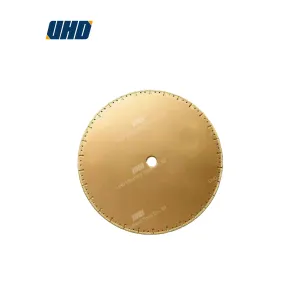
Vacuum brazed diamond grinding wheels are designed for high-efficiency metal processing and multi-axis automatic grinding equipment. To maintain grinding precision, wheel life, and process stability, operators should manage the complete operating cycle—from pre-use inspection and installation to parameter adjustment, cleaning, wear monitoring, and replacement. This guide from UHD Ultrahard Tools Co., Ltd. provides practical considerations for technicians and production teams using vacuum brazed diamond grinding wheels on cast iron components.
Automatic grinding systems depend on stable wheel condition, accurate mounting, and coordinated machine settings. Cast iron characteristics, workpiece geometry, coolant or cleaning conditions, and equipment configuration can all influence grinding results. Regular maintenance helps operators identify abnormal wear, contamination, imbalance, or installation issues before they affect surface quality and production consistency.
Before installing a vacuum brazed diamond grinding wheel, inspect the wheel and confirm that it is suitable for the intended automatic grinding operation.
Remove chips, dust, oil residue, and other contaminants from the wheel seat, flange, and spindle interface before mounting.
Use the equipment manufacturer’s approved mounting procedure and tightening method. Avoid excessive force that could distort the wheel or mounting components.
After installation, check clearance, rotation direction where applicable, guarding, and machine readiness before beginning production grinding.
There is no single setting that applies to every cast iron automatic grinding operation. The appropriate parameters should be established with reference to the automatic equipment, wheel specification, workpiece condition, required finish, and observed grinding results.
| Adjustment area | Operating consideration |
|---|---|
| Wheel speed | Stay within the wheel’s permitted speed and the automatic equipment’s operating limits. Confirm the applicable specification before changing speed. |
| Feed rate | Adjust gradually according to stock removal, machine rigidity, wheel condition, and the required surface quality. |
| Grinding depth | Use a controlled depth of cut to avoid excessive loading, vibration, heat, or uneven wheel wear. |
| Contact and alignment | Check that the wheel follows the intended path and maintains suitable contact with the cast iron workpiece throughout the automatic cycle. |
A clean grinding environment supports stable automatic operation and makes wheel wear easier to evaluate. Maintenance intervals should be based on production frequency, material condition, contamination level, and the recommendations for the specific equipment and wheel.
Vacuum brazing firmly secures diamond particles to the tool surface, supporting durability and efficient grinding. Even so, wheel condition should be monitored throughout production rather than judged only by appearance.
Replacement should be considered when the wheel no longer delivers the required grinding performance, when wear affects the intended geometry, or when inspection identifies damage that makes continued use unsuitable. The decision should take into account:
UHD’s vacuum brazed diamond grinding wheel range includes models such as UDW455, UDW405, UDW355, UDW305, and UDW255. The appropriate selection depends on equipment compatibility, wheel dimensions, application requirements, cast iron workpiece geometry, and the desired grinding process.
For applications with special access, profile, or contact requirements, UHD can support discussions about customized pipe segment geometry and provide technical information for application evaluation. Product selection and operating parameters should be confirmed with the relevant equipment specifications and actual on-site grinding conditions.
Practical recommendation: Establish a documented inspection and wear-monitoring routine, then review wheel condition together with machine settings and workpiece results. This approach helps technicians make replacement and parameter decisions based on the complete grinding process rather than on a single symptom.
With its focus on diamond tools, abrasive products, and customized vacuum brazed diamond solutions, UHD Ultrahard Tools Co., Ltd. provides product guidance and application support for industrial metalworking requirements. Contact UHD to discuss wheel specifications, automatic equipment compatibility, custom geometry, and technical support for cast iron grinding applications.

 162
|
162
|
 UHD Ultrahard Tools Co., Ltd resin-bond diamond grinding wheels cast iron slag and burr removal low-dust low-odor grinding diamond grinding wheel market trends
 338
|
UHD Ultrahard Tools ultrahard material tools diamond tools vacuum-brazed diamond abrasives metal and stone processing
351
|
UHD Ultrahard Tools Co., Ltd superhard material tools diamond tools vacuum-brazed diamond tools metal and stone processing
338
|
UHD Ultrahard Tools ultrahard material tools diamond tools vacuum-brazed diamond abrasives metal and stone processing
351
|
UHD Ultrahard Tools Co., Ltd superhard material tools diamond tools vacuum-brazed diamond tools metal and stone processing
 197
|
UHD Ultrahard Tools superabrasive tools diamond cutting tools diamond grinding tools industrial machining
197
|
UHD Ultrahard Tools superabrasive tools diamond cutting tools diamond grinding tools industrial machining
 290
|
UHD Ultrahard Tools vacuum-brazed diamond abrasive diamond cutting tools superabrasive tools metal and stone processing
290
|
UHD Ultrahard Tools vacuum-brazed diamond abrasive diamond cutting tools superabrasive tools metal and stone processing





.png?x-oss-process=image/resize,m_fill,h_300,w_300/format,webp)


.png?x-oss-process=image/resize,m_fill,h_300,w_300/format,webp)

