UHD Ultrahard Tools | Technical Maintenance Guide
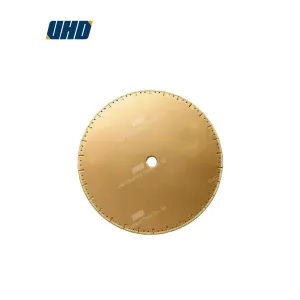
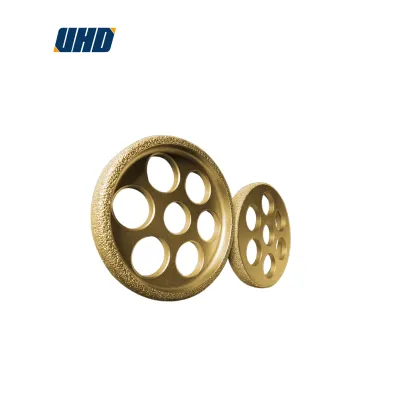
For multi-axis automatic grinding of cast iron, consistent wheel condition is essential for stable grinding efficiency, surface quality, and equipment operation. This guide from UHD Ultrahard Tools presents a practical method for inspecting, maintaining, monitoring, and assessing vacuum brazed diamond grinding wheels.
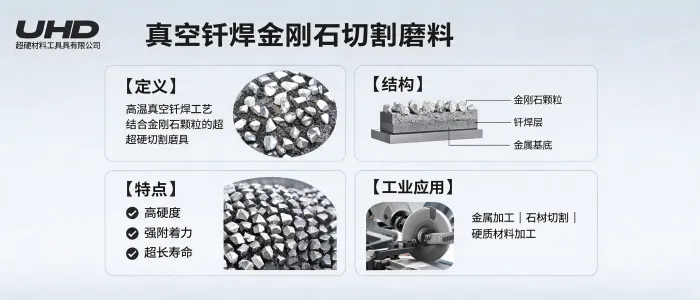
Automatic grinding equipment depends on coordinated movement, stable contact, and repeatable process conditions. A vacuum brazed diamond grinding wheel uses a brazed bonding layer to hold diamond particles firmly on the working surface. As grinding continues, the diamond particles and brazing layer are gradually affected by contact pressure, material removal, heat, contamination, and process adjustment.
Regular maintenance helps operators identify changes before they develop into larger process problems. It also supports better decisions about cleaning, dressing or replacement, speed and feed adjustment, and the suitability of the wheel for a specific cast iron application.
Check the wheel body, diamond working surface, brazed areas, mounting interface, and identification information before installation.
Confirm correct seating, secure fixation, alignment, clearance, and compatibility with the automatic grinding equipment.
Observe grinding efficiency, workpiece finish, vibration, noise, heat, and changes in the wheel’s cutting behavior.
Clean the wheel, record operating observations, and evaluate whether the wheel remains suitable for the next production cycle.
Before mounting a vacuum brazed diamond grinding wheel, inspect it in a clean and well-lit area. The purpose is to identify visible damage or abnormal conditions that could affect safe operation and grinding stability.
Important: Do not install a wheel with suspected structural damage, loose components, or an uncertain mounting condition. Follow the operating and safety requirements of the grinding equipment and the wheel supplier.
A suitable wheel can still produce unstable results if it is incorrectly mounted or poorly aligned. Before starting automatic grinding, verify the following conditions:
| Check area | What to confirm |
|---|---|
| Mounting and seating | The wheel is fully seated, correctly fixed, and free from chips, dirt, or foreign material at the contact surfaces. |
| Alignment and runout | The wheel is aligned with the spindle and workpiece path, with no abnormal runout or interference during dry movement checks. |
| Machine compatibility | The wheel size, mounting configuration, and operating conditions are compatible with the multi-axis automatic grinding equipment. |
| Safety and guarding | Protective guards, workholding, emergency functions, and other required safety measures are in place before operation. |
Cast iron grinding can generate abrasive debris and accumulated residue. Contamination on the wheel, workpiece, fixture, or machine area may affect contact conditions and reduce process repeatability.
Cleaning requirements may vary according to the wheel specification, machine design, coolant or dry-grinding method, and the type of cast iron being processed.
Grinding performance is influenced by the relationship between wheel speed, feed movement, depth of engagement, workpiece geometry, material condition, and machine rigidity. There is no single speed or feed value that applies to every cast iron automatic grinding application.
Compare material-removal performance and cycle behavior over time. A gradual loss of efficiency may indicate wheel wear, contamination, or unsuitable process conditions.
Inspect the ground cast iron surface for changes in finish, marks, burning indications, inconsistent contact, or other defects.
Unusual vibration, noise, heat, or movement should be investigated before continuing with a longer automatic production cycle.
Change one relevant process factor at a time where practical, and document the result so that stable settings can be identified for the application.
Process note: Use the wheel and equipment manufacturer’s recommended operating limits as the primary reference. UHD can support application-specific evaluation, including wheel specification and customized cutting-section geometry.
Wear should be assessed through a combination of wheel-surface inspection and process results. Relying on only one symptom may lead to an incorrect maintenance decision.
| Observation | Possible indication | Recommended response |
|---|---|---|
| Reduced grinding efficiency | Diamond particle wear, loading, contamination, or process conditions that are no longer well matched. | Stop for inspection, clean as appropriate, review process settings, and assess remaining abrasive condition. |
| Surface defects or inconsistent finish | Uneven contact, wheel wear, alignment issues, workholding problems, or unstable automatic movement. | Check wheel runout, mounting, machine alignment, workpiece fixation, and the working surface. |
| Increasing vibration or noise | Possible imbalance, loose mounting, interference, damage, or abnormal contact. | Stop the operation and perform a full machine, mounting, and wheel inspection before restart. |
| Excessive heat | Insufficient process control, excessive contact, loading, poor heat removal, or a change in grinding conditions. | Review speed, feed, engagement, cleaning, and applicable cooling or process requirements. |
| Brazing-layer change or particle loss | Potential deterioration of abrasive retention or localized wheel damage. | Remove the wheel from service for technical evaluation if the condition may affect safe or stable operation. |
After each production run or defined maintenance interval, allow the equipment to reach a safe stopped condition and inspect the wheel before storage or reuse.
A simple maintenance record can help connect wheel wear with grinding efficiency, surface quality, vibration, heat, and operating changes. This provides a more reliable basis for replacement and process improvement than visual inspection alone.
Inspect for loading, diamond wear, contamination, or changes in speed and feed. Confirm that the wheel remains appropriate for the cast iron application.
Check wheel alignment, runout, workholding, automatic-axis movement, contact conditions, and uneven wear across the working surface.
Stop the process and inspect mounting, machine components, guarding, interference, and the wheel body. Do not continue with an uncertain condition.
Review contact conditions, engagement, feed, wheel cleanliness, and the applicable cooling or dry-grinding procedure before making further adjustments.
Maintenance results are most useful when they are connected with the actual grinding application. When reviewing a wheel or diagnosing wear, prepare information such as:
UHD Ultrahard Tools supplies vacuum brazed diamond grinding wheel solutions for automatic grinding applications and offers technical support for specification review, customized cutting-section geometry, and application-related documentation. Product suitability should be assessed according to the equipment, workpiece, process conditions, and required grinding result.
Pre-use inspection, correct installation, controlled operating conditions, regular cleaning, process monitoring, and documented wear assessment form the foundation of reliable vacuum brazed diamond grinding wheel management. For cast iron automatic grinding, this structured approach helps identify efficiency loss and surface-quality changes earlier while supporting informed decisions about wheel maintenance, adjustment, and replacement.
 162
|
 UHD Ultrahard Tools Co., Ltd resin-bond diamond grinding wheels cast iron slag and burr removal low-dust low-odor grinding diamond grinding wheel market trends
 197
|
UHD Ultrahard Tools superhard material tools diamond tools brazed diamond abrasives metal and stone processing
 496
|
UHD Ultrahard Tools ultrahard material tools diamond tools vacuum-brazed diamond abrasives industrial processing solutions
 276
|
UHD Ultrahard Tools Co., Ltd ultrahard material tools vacuum-brazed diamond tools diamond cutting abrasives industrial metal and stone processing
 447
|
UHD Ultrahard Tools Co., Ltd hand diamond grinding wheel diamond tools industrial processing solutions ultrahard material products