
Vacuum-brazed diamond grinding wheels used on automatic cast iron grinding equipment require consistent inspection, controlled operating conditions, and timely wear assessment. UHD Ultrahard Tools Co., Ltd. provides this practical maintenance and adjustment guide to help operators and production teams manage wheel condition, grinding stability, and replacement decisions.
Scope: This guide applies to vacuum-brazed diamond grinding wheels used for automatic and multi-axis grinding of cast iron and related metalworking applications. Actual speed, feed, grinding depth, coolant practice, and mounting requirements should always be confirmed against the equipment and wheel specifications.
Automatic grinding equipment relies on repeatable wheel movement, stable contact, and consistent material removal. A wheel that is incorrectly installed, overloaded, contaminated, or excessively worn can affect grinding efficiency, surface quality, vibration, noise, and heat generation.
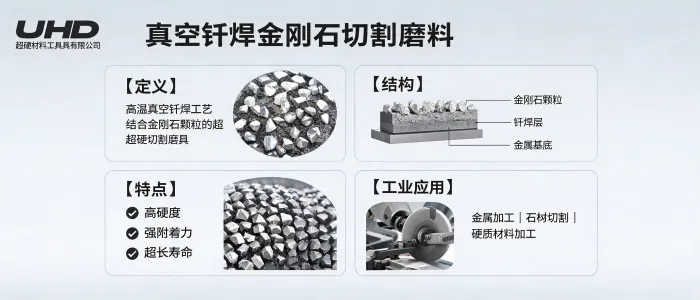
Vacuum brazing firmly retains diamond particles on the working surface and supports durable grinding performance. However, the wheel still needs to be matched to the equipment and application, monitored during production, and cleaned and stored appropriately after use.
Inspect the wheel before mounting it on automatic grinding equipment. The purpose is to identify visible damage, contamination, or compatibility issues before the wheel enters production.
Correct installation is essential for high-precision grinding and stable automatic operation. Clean the contact surfaces and mounting components before assembly, and follow the equipment manufacturer’s procedure for securing the wheel.
Important: Do not exceed the permitted operating speed or use a mounting arrangement that has not been verified for the selected wheel and equipment.
Automatic cast iron grinding should be adjusted as a controlled process rather than by changing several variables at the same time. Use the approved process window for the equipment, wheel specification, workpiece geometry, and required finish.
| Adjustment area | Maintenance focus | What to monitor |
|---|---|---|
| Wheel speed | Keep the operating condition within the approved equipment and wheel limits. | Vibration, noise, heat, surface condition, and process stability. |
| Feed movement | Avoid sudden increases that overload the diamond working surface or automatic axes. | Grinding time, load behavior, surface consistency, and abnormal sound. |
| Grinding depth | Use a controlled depth suited to the workpiece and required material removal. | Heat generation, wheel wear, workpiece quality, and motor or equipment load. |
| Axis coordination | Confirm that multi-axis movement is smooth and that the wheel follows the programmed path. | Contact consistency, dimensional variation, vibration, and unexpected pauses. |
When a process change is necessary, adjust one factor at a time where practical and record the result. This makes it easier to identify whether a change improves efficiency or creates excessive wheel stress.
Excessive contact pressure or grinding depth may accelerate wear and increase heat. If the wheel engages the workpiece unevenly, the process may produce inconsistent results even when the programmed settings appear unchanged.
Cast iron debris and process residue can affect the working surface, mounting area, and subsequent grinding results. Cleaning should be performed after the equipment has stopped and the wheel has been safely isolated.
Wheel replacement should not be based only on elapsed time. Track the condition of the wheel together with process efficiency and workpiece quality. A simple production record can help identify gradual changes before they become a larger equipment or quality issue.
| Observed condition | Possible indication | Recommended response |
|---|---|---|
| Grinding time increases under the same process conditions | Reduced grinding efficiency or progressive wheel wear | Review wheel condition, process settings, workpiece variation, and equipment status. |
| Surface quality becomes inconsistent | Uneven contact, contamination, alignment change, or wheel wear | Stop and inspect the wheel, mounting, workpiece support, and automatic motion. |
| Vibration or noise changes noticeably | Possible mounting, alignment, equipment, or wheel-condition issue | Pause operation and investigate before continuing production. |
| Heat rises or discoloration appears on the workpiece | Excessive process load, inadequate conditions, or reduced cutting action | Review speed, feed, depth, contact, and wheel condition using approved parameters. |
When automatic grinding becomes unstable, avoid compensating immediately by increasing process intensity. First identify whether the change is related to the wheel, equipment, workpiece, mounting, or programmed movement.
Consider replacement when the wheel no longer supports the required grinding efficiency, surface quality, stability, or process repeatability after basic inspection and parameter review. Replacement assessment should consider:
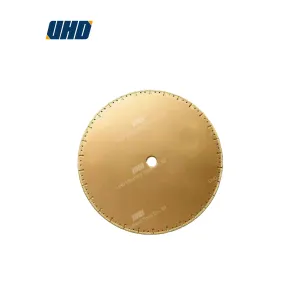
UHD Ultrahard Tools Co., Ltd. develops vacuum-brazed diamond grinding wheels for metalworking applications, including automatic grinding of cast iron materials. The product range includes several wheel sizes, such as UDW455, UDW405, UDW355, UDW305, and UDW255, subject to application and equipment requirements.
For projects with specific machine interfaces, grinding paths, or workpiece requirements, UHD can support application evaluation through customized segment geometries, technical information, and communication with its application engineering team. Providing equipment details, workpiece material, current process conditions, observed wear, and quality requirements can help establish a more suitable grinding solution.
Practical approach: Inspect before use, install correctly, adjust gradually, record process changes, clean after operation, and replace the wheel when performance or condition no longer meets the application requirement.

 69
|
69
|
 UHD Ultrahard Tools Co., Ltd vacuum-brazed diamond tools superhard material tools diamond cutting and grinding tools industrial machining applications
 162
|
UHD Ultrahard Tools Co., Ltd resin-bond diamond grinding wheels cast iron slag and burr removal low-dust low-odor grinding diamond grinding wheel market trends
162
|
UHD Ultrahard Tools Co., Ltd resin-bond diamond grinding wheels cast iron slag and burr removal low-dust low-odor grinding diamond grinding wheel market trends
 447
|
UHD Ultrahard Tools Co., Ltd hand diamond grinding wheel diamond tools industrial processing solutions ultrahard material products
447
|
UHD Ultrahard Tools Co., Ltd hand diamond grinding wheel diamond tools industrial processing solutions ultrahard material products
 429
|
UHD Ultrahard Tools vacuum-brazed diamond cutting abrasive superhard material tools metalworking stone processing
63
|
UHD Ultrahard Tools Co., Ltd cast iron automated grinding vacuum brazed diamond grinding wheel diamond grinding tool selection multi-axis automatic grinding
429
|
UHD Ultrahard Tools vacuum-brazed diamond cutting abrasive superhard material tools metalworking stone processing
63
|
UHD Ultrahard Tools Co., Ltd cast iron automated grinding vacuum brazed diamond grinding wheel diamond grinding tool selection multi-axis automatic grinding





.png?x-oss-process=image/resize,m_fill,h_300,w_300/format,webp)

.png?x-oss-process=image/resize,m_fill,h_300,w_300/format,webp)




