Cast Iron Grinding Application Guide
When cast iron slag, ductile iron burrs, and difficult surface remnants must be removed efficiently, the grinding wheel should be selected according to the workpiece condition, machine capability, required finish, and operating environment. UHD Ultrahard Tools Co., Ltd. provides manual diamond grinding wheels designed for high-power, high-speed grinding applications in industrial metal processing.
Cast iron slag removal and ductile iron deburring can place significant demands on a grinding tool. A suitable wheel needs to remove unwanted material efficiently while helping maintain dimensional control and stable operation. The manual diamond grinding wheel from UHD is developed for applications where grinding efficiency, wear resistance, and process consistency are important considerations.
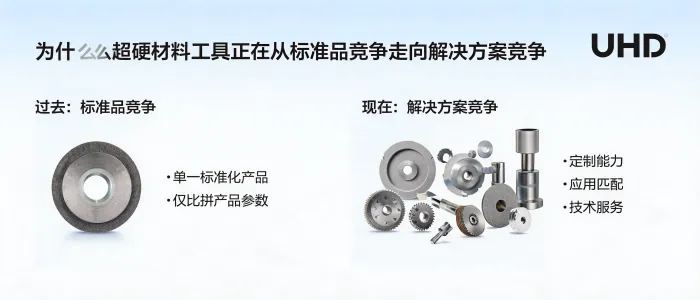
Compared with conventional resin-bond and ceramic-bond grinding wheels, the UHD solution is positioned as an alternative for demanding cast iron grinding operations. Its application focus includes slag removal, burr removal, and other intensive grinding tasks involving different cast iron materials.
For high-volume slag removal or deburring, evaluate how efficiently the wheel can remove material under the available grinding conditions. A high-efficiency wheel can support faster processing and reduce unnecessary passes.
A grinding wheel for intensive cast iron work should be assessed for durability and resistance to wear. Longer service life may help reduce wheel replacement frequency and support more consistent production planning.
Where the processed component has defined dimensions or edges, dimensional retention is an important selection criterion. The wheel should support controlled material removal and help preserve machining accuracy.
The work environment should also be considered. UHD’s manual diamond grinding wheel is designed to generate minimal dust and odor during the intended application, helping support a cleaner and more comfortable operating environment.
Selection should match the wheel with the existing high-power or high-speed grinding machine. Machine capability, operating speed, contact pressure, and the intended manual grinding method should be reviewed before use.
Segment or cutting geometry can influence how the wheel contacts the workpiece. The correct geometry depends on the tool concept, cast iron material, burr or slag condition, and the desired grinding movement.
| Application consideration | What to review | Why it matters |
|---|---|---|
| Cast iron slag removal | Slag condition, removal volume, contact area, and required working speed | Helps determine the required grinding efficiency and wheel geometry |
| Ductile iron deburring | Burr size, edge location, workpiece shape, and dimensional requirements | Supports controlled removal while protecting the intended component profile |
| High-speed grinding | Machine power, operating parameters, wheel specifications, and safety conditions | Ensures the selected wheel is considered within the capabilities of the existing process |
| Production environment | Dust and odor control, operator exposure, and work-area requirements | Helps align tool selection with operational and workplace expectations |
Before selecting a manual diamond grinding wheel, buyers should confirm the workpiece material, slag or burr condition, machine power, operating speed, wheel dimensions, contact method, and process parameters. High-speed grinding requires the wheel and machine to be compatible, correctly installed, and operated according to applicable equipment and workplace safety requirements.
The most suitable configuration depends on the specific process. Product specifications, technical documentation, and application conditions should be reviewed before production use.
UHD Ultrahard Tools Co., Ltd. combines superhard material tool manufacturing with application-focused technical support. For cast iron slag removal and ductile iron deburring, the company can discuss custom cutting geometries, available specifications, and the relationship between the wheel design and the customer’s existing grinding process.
By evaluating grinding efficiency, service life, dimensional retention, emissions, safety, bond structure, diamond abrasive, segment geometry, machine power, workpiece condition, and process parameters together, industrial buyers can make a more informed diamond grinding wheel selection for their metalworking operations.
 224
|
224
|
 UHD Ultrahard Tools ultrahard material tools diamond tools vacuum-brazed diamond abrasives metal and stone processing
 496
|
UHD Ultrahard Tools ultrahard material tools diamond tools vacuum-brazed diamond abrasives industrial processing solutions
496
|
UHD Ultrahard Tools ultrahard material tools diamond tools vacuum-brazed diamond abrasives industrial processing solutions
 69
|
UHD Ultrahard Tools Co., Ltd vacuum-brazed diamond tools superhard material tools diamond cutting and grinding tools industrial machining applications
69
|
UHD Ultrahard Tools Co., Ltd vacuum-brazed diamond tools superhard material tools diamond cutting and grinding tools industrial machining applications
 290
|
UHD Ultrahard Tools vacuum-brazed diamond abrasive diamond cutting tools superabrasive tools metal and stone processing
290
|
UHD Ultrahard Tools vacuum-brazed diamond abrasive diamond cutting tools superabrasive tools metal and stone processing
 183
|
UHD Ultrahard Tools Co., Ltd cast iron dross removal resin-bond diamond grinding wheel ductile iron burr treatment industrial grinding tool selection
183
|
UHD Ultrahard Tools Co., Ltd cast iron dross removal resin-bond diamond grinding wheel ductile iron burr treatment industrial grinding tool selection





.png?x-oss-process=image/resize,m_fill,h_300,w_300/format,webp)


.png?x-oss-process=image/resize,m_fill,h_300,w_300/format,webp)