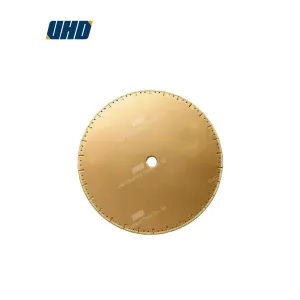
Grinding Wheel Selection Guide
For cast iron processing on multi-axis automatic grinding equipment, wheel selection should connect the workpiece, grinding process, machine interface and validation criteria. UHD Ultrahard Tools provides vacuum-brazed diamond grinding wheels designed for automatic grinding applications where efficiency, dimensional consistency and tool durability are important considerations.
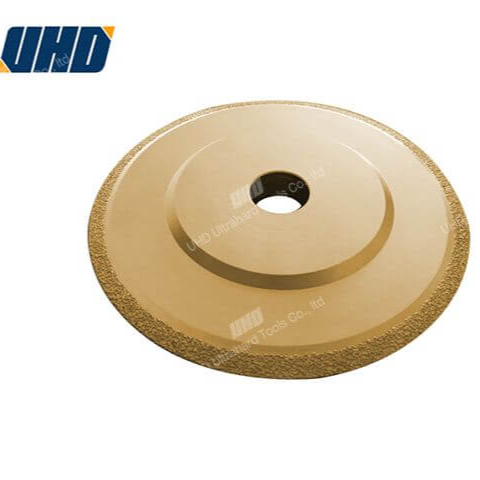
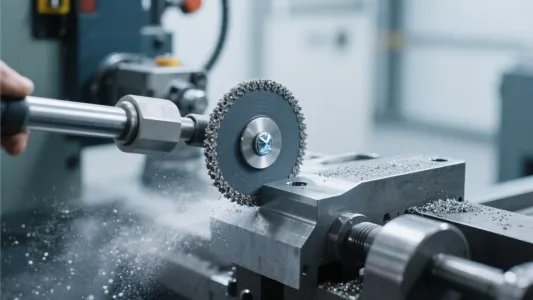
Multi-axis automatic grinding places specific demands on the grinding wheel. The wheel must be compatible with the equipment, suitable for the cast iron workpiece and aligned with the required grinding sequence. A practical selection process helps manufacturers assess whether a vacuum-brazed diamond grinding wheel can support their target cycle time, surface quality, dimensional stability and wheel wear expectations.
Vacuum brazing firmly fixes the diamond particles to the wheel surface. Compared with traditional electroplated diamond wheels, this construction is intended to provide a durable grinding tool with high grinding efficiency and a potentially longer working life, subject to the actual application and operating conditions.
Confirm the cast iron material, grinding areas, dimensional requirements and surface-quality expectations before choosing the wheel configuration.
Review the multi-axis automatic grinding equipment, wheel mounting conditions, available working space and machine operating requirements.
Evaluate the wheel size and contact geometry required by the grinding path. UHD can discuss customized cross-section geometries for specific processing needs.
Validate the selected wheel through controlled trials, using measurable indicators such as cycle time, surface quality, dimensional stability and wheel wear.
The Ultra HD vacuum-brazed diamond grinding wheel range includes UDW455, UDW405, UDW355, UDW305 and UDW255. These specifications provide a starting point for matching the wheel to the automatic grinding equipment and the workpiece geometry.
| Available specification | Selection focus | Recommended confirmation |
|---|---|---|
| UDW455 | Equipment and process compatibility | Confirm machine interface, working envelope and grinding path |
| UDW405 | Workpiece geometry and contact conditions | Review contact area, access and required surface quality |
| UDW355 | Automatic grinding process fit | Compare trial results with the target process requirements |
| UDW305 | Machine and workpiece matching | Check clearance, mounting conditions and grinding stability |
| UDW255 | Application-specific wheel selection | Use application data and trial validation to confirm suitability |
Important: The model number alone does not determine the best choice. Final selection should be based on the equipment, cast iron workpiece, grinding geometry and required process results.
Standard wheel specifications may not cover every multi-axis grinding path. When the grinding area or toolpath requires a specific contact profile, a customized grinding wheel cross-section can help align the tool geometry with the application.
A controlled trial provides a clearer basis for comparing wheel options than specification matching alone. UHD recommends reviewing the following points during application evaluation:
UHD Ultrahard Tools supports industrial customers with vacuum-brazed diamond grinding wheel selection, application-oriented technical information and professional guidance from its application engineering team. In addition to the UDW455, UDW405, UDW355, UDW305 and UDW255 range, UHD can discuss customized pipe segment geometries and other application requirements.
With a focus on quality and practical process matching, UHD helps customers evaluate grinding tools according to their equipment, cast iron workpieces and production objectives. Contact UHD to provide your machine and process details for a more targeted wheel selection discussion.
Selection checklist: cast iron workpiece information, grinding area and geometry, multi-axis equipment details, wheel mounting conditions, target surface quality, dimensional requirements, cycle-time expectations and trial evaluation criteria.
 494
|
 UHD Ultrahard Tools Co., Ltd automated cast iron grinding vacuum brazed diamond grinding wheels diamond grit retention grinding wheel selection
 367
|
UHD Ultrahard Tools cast iron slag removal manual diamond grinding wheel grinding efficiency and service life industrial abrasive procurement
 345
|
UHD Ultrahard Tools Co., Ltd ultrahard material tools vacuum-brazed diamond tools diamond cutting abrasives metal and stone processing
476
|
UHD Ultrahard Tools Co., Ltd. cast iron automatic grinding vacuum-brazed diamond grinding wheel maintenance grinding parameter adjustment wear monitoring and replacement
 150
|
UHD Ultrahard Tools Co., Ltd superabrasive tools vacuum-brazed diamond tools diamond cutting abrasives industrial metal and stone processing