
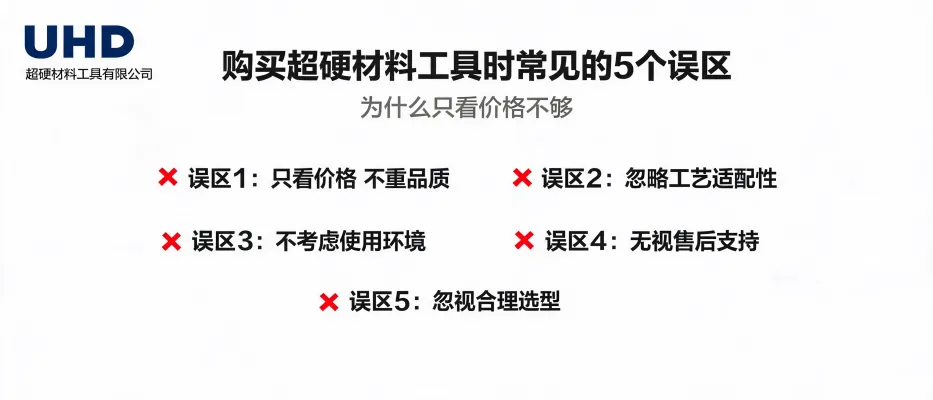
When industrial buyers evaluate ultrahard tools, price is only one part of the decision. In real procurement, the better question is whether the tool fits the process, the material, the working environment, and the service support behind it. For manufacturers that rely on stable cutting, grinding, or finishing results, these details often matter more than a low initial quote.
UHD Ultrahard Tools Co., Ltd focuses on ultrahard material tools and vacuum brazed diamond cutting abrasives for industrial applications. With a B2B approach and a solution-oriented mindset, UHD supports buyers who need practical product selection based on performance requirements rather than price alone.
Buying ultrahard tools involves more than comparing catalog names or unit prices. The following mistakes are common in industrial sourcing and can lead to unstable performance, unnecessary replacement, or a mismatch between the tool and the actual production process.
| Common mistake | Why it matters | What to check instead |
|---|---|---|
| 1. Choosing by price only | A lower price may not reflect the right tool structure, wear resistance, or application fit. | Review process requirements, expected service life, and total usage cost. |
| 2. Ignoring process fit | A tool that works well in one process may perform poorly in another. | Match the tool to the intended cutting, grinding, or finishing process. |
| 3. Overlooking the working environment | Heat, load, material hardness, and production conditions can affect tool stability. | Confirm operating conditions before final selection. |
| 4. Not confirming supplier support | Without responsive support, it is harder to adjust the solution for real production needs. | Evaluate technical communication, documentation, and after-sales service. |
| 5. Buying without clear application goals | Unclear goals can lead to a product that is technically suitable but operationally inefficient. | Define target output, material type, and performance expectations in advance. |
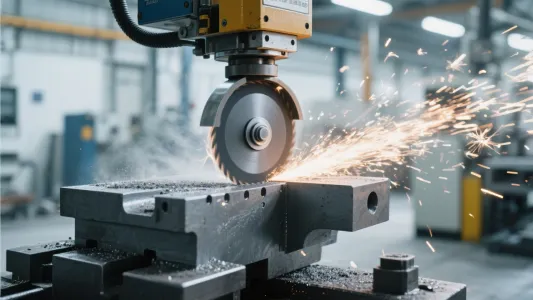
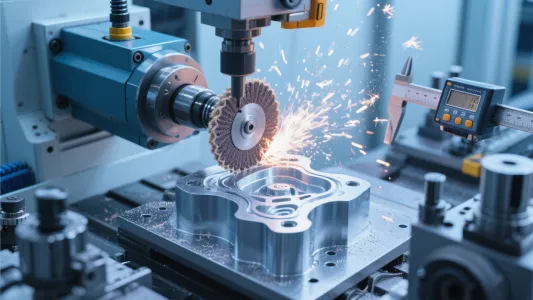
In ultrahard material applications, a tool must be evaluated in context. A product that appears economical at the purchasing stage may create higher operational costs if it does not match the material, edge requirements, or production rhythm. For this reason, process fit is a basic procurement principle, not an optional consideration.
A more practical procurement review usually starts with a few simple questions. These questions help buyers reduce mismatch risk and support better supplier comparison.
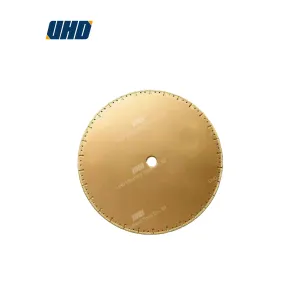
UHD Ultrahard Tools Co., Ltd serves industrial markets with ultrahard material tools and vacuum brazed diamond cutting abrasives. The company emphasizes quality, product positioning, and technical service, helping buyers match tools with real process requirements.
For B2B customers, this means the purchasing discussion can go beyond specifications alone. It can include application fit, usage environment, and practical support, which are all important when selecting tools for metal processing, stone processing, and other industrial operations.
Brand perspective: UHD’s approach is based on “quality builds the brand” and a commitment to comprehensive hard material product solutions.
When comparing suppliers, industrial buyers can use a simple evaluation framework. It does not require complex assumptions, but it does require clear priorities.
For manufacturers seeking more practical procurement decisions, this approach helps create a clearer path from requirement definition to product selection. UHD provides ultrahard material tools with this industrial logic in mind, supporting buyers who need dependable solutions for specific application scenarios.
If your project involves ultrahard material tools or vacuum brazed diamond cutting abrasives, the best purchasing decision is usually the one that aligns product performance with real process needs. Price matters, but it should be evaluated alongside fit, environment, and service support.


.png?x-oss-process=image/resize,m_fill,h_300,w_300/format,webp)

 440
|
440
|
 diamond grinding wheel
gray cast iron machining
dust control in manufacturing
industrial air quality
green manufacturing
diamond grinding wheel
gray cast iron machining
dust control in manufacturing
industrial air quality
green manufacturing
 206
|
UHD Ultrahard Tools
ultrahard material tools selection
working condition matching
material hardness
industrial cutting
206
|
UHD Ultrahard Tools
ultrahard material tools selection
working condition matching
material hardness
industrial cutting
 387
|
diamond wheel geometry
ductile iron deburring
grinding wheel selection
UHD diamond wheels
precision grinding tools
387
|
diamond wheel geometry
ductile iron deburring
grinding wheel selection
UHD diamond wheels
precision grinding tools
 60
|
ductile iron deburring
resin-bonded diamond wheel
precision grinding process
low-noise grinding
surface finish optimization
60
|
ductile iron deburring
resin-bonded diamond wheel
precision grinding process
low-noise grinding
surface finish optimization
 424
|
vacuum brazed diamond wheel
electroplated vs brazed grinding wheel
thermal stability in grinding
surface finish improvement
precision grinding solutions
424
|
vacuum brazed diamond wheel
electroplated vs brazed grinding wheel
thermal stability in grinding
surface finish improvement
precision grinding solutions





.png?x-oss-process=image/resize,m_fill,h_400,w_400/format,webp)



