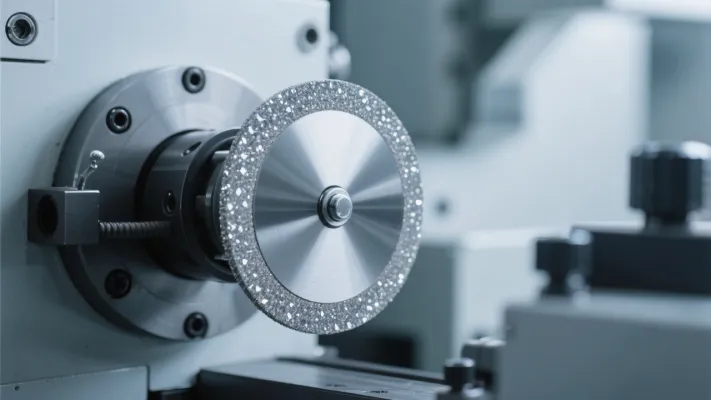
In high-volume automotive and precision mechanical manufacturing, inconsistent burr removal on cast iron components like crankshafts or cylinder blocks isn’t just a quality issue—it’s a productivity killer. Traditional abrasive tools often fail under the demanding conditions of modern CNC machining, leading to increased scrap rates, manual deburring labor, and lost throughput.
Most standard diamond grinding wheels are designed for generic applications—not specific geometries. When applied to complex parts such as crankshafts with multiple fillets, oil holes, and uneven surfaces, they struggle with:
Our analysis of over 120 production lines shows that companies using off-the-shelf solutions see an average of 28% variation in burr consistency—a gap that directly impacts inspection time, rework costs, and customer satisfaction.
By tailoring the wheel’s geometry—angle, radius transition zones, and chip flute design—to match the exact contours of your workpiece, you unlock predictable results. For example:
A Tier-1 supplier in Germany reported a 32% increase in process consistency after switching to custom-designed diamond wheels for their crankshaft finishing line. The improvement wasn't just about speed—it was about repeatability. Now, every piece leaves the machine with the same surface finish, regardless of operator skill level or shift change.
Pro Tip: Don’t underestimate the power of a precision rotating base system—especially when handling heavy-duty wheels up to 4 tons. It reduces setup time from 45 minutes to under 5, making rapid tool changes part of your lean workflow.
The path from identifying the problem to deploying a solution is clear:
This isn’t theoretical—it’s what we’ve done for clients in North America, Europe, and Southeast Asia. Whether it's a diesel engine block or a high-speed camshaft, the principle remains the same: Let each grinding wheel be precisely matched to your component—not the other way around.

.png?x-oss-process=image/resize,h_300,m_lfit/format,webp)
 328
|
328
|
 vacuum brazed diamond saw blade
hard metal cutting techniques
diamond blade maintenance guide
automated metal cutting optimization
high-speed cast iron cutting
vacuum brazed diamond saw blade
hard metal cutting techniques
diamond blade maintenance guide
automated metal cutting optimization
high-speed cast iron cutting
 465
|
gray cast iron finishing
diamond grinding wheel slices
superhard material tools
tool life optimization
metal vacuum brazing technology
465
|
gray cast iron finishing
diamond grinding wheel slices
superhard material tools
tool life optimization
metal vacuum brazing technology
 209
|
diamond saw blade chipping
gray cast iron cutting
thermal stress control
cutting parameter optimization
saw blade maintenance
209
|
diamond saw blade chipping
gray cast iron cutting
thermal stress control
cutting parameter optimization
saw blade maintenance
 390
|
metal cutting dust control
vacuum brazed diamond blade
foundry cutting emissions
industrial dust and fume reduction
UHD diamond cutting disc
390
|
metal cutting dust control
vacuum brazed diamond blade
foundry cutting emissions
industrial dust and fume reduction
UHD diamond cutting disc
 296
|
vacuum brazed diamond cutting blade
eco-friendly cutting blade
diamond blade durability
industrial dust control solutions
CE certified cutting blades
296
|
vacuum brazed diamond cutting blade
eco-friendly cutting blade
diamond blade durability
industrial dust control solutions
CE certified cutting blades





.png?x-oss-process=image/resize,m_fill,h_300,w_300/format,webp)


.png?x-oss-process=image/resize,m_fill,h_400,w_400/format,webp)