Carbon & structural steel
Prioritize stable diamond retention and a core design that minimizes heat concentration. If burr and discoloration are frequent, reduce rubbing by choosing a design that maintains edge exposure and chip clearance.

In metalworking and foundry operations, diamond cut-off wheels and blades are expected to deliver consistent cut quality under heat, vibration, and intermittent impact. Yet many facilities still fight the same cycle: premature wear, glazing, segment loss, rising dust, and unstable cutting speed that disrupts takt time and safety compliance. The following technical guide breaks down what actually extends service life—especially vacuum brazing, diamond/metal system selection, and structural design choices that manage heat and chip evacuation—so manufacturers can optimize throughput while protecting operators and equipment.
Longer wheel life lowers unplanned changeovers, stabilizes cut depth, and reduces the probability of heat tint, micro-cracking, and burr formation—issues that often “move” cost downstream into rework and inspection.
The dominant failure modes in heavy metal cutting are thermal overload, bond fatigue, and diamond pull-out. Dust and smoke typically rise when the cutting edge dulls and friction replaces shearing.
They keep diamonds exposed and anchored, evacuate chips efficiently, and keep the core stable—so cutting stays “sharp” rather than becoming a heat-generating rub.
In high-duty cutting of steel, cast iron, and alloyed components, tool life is rarely limited by “abrasion only.” Instead, the combined effect of thermal cycling and mechanical shock reduces bond integrity. When a wheel heats unevenly, the cutting rim may lose diamond retention or develop localized wear patterns that accelerate glazing. Glazing is more than an inconvenience: it increases contact area, elevates friction, and forces operators to increase feed or pressure—exactly the conditions that generate more heat and dust.
In audits across mixed metal fabrication lines, a recurring pattern is observed: once the wheel’s cutting edge becomes dull, spindle load can increase by 10–25%, while surface discoloration (heat tint) and burr height rise noticeably. In parallel, visible airborne particulate during dry cutting can increase by 20–40% because the process transitions from efficient chip formation to material smearing and micro-fracture at the interface.
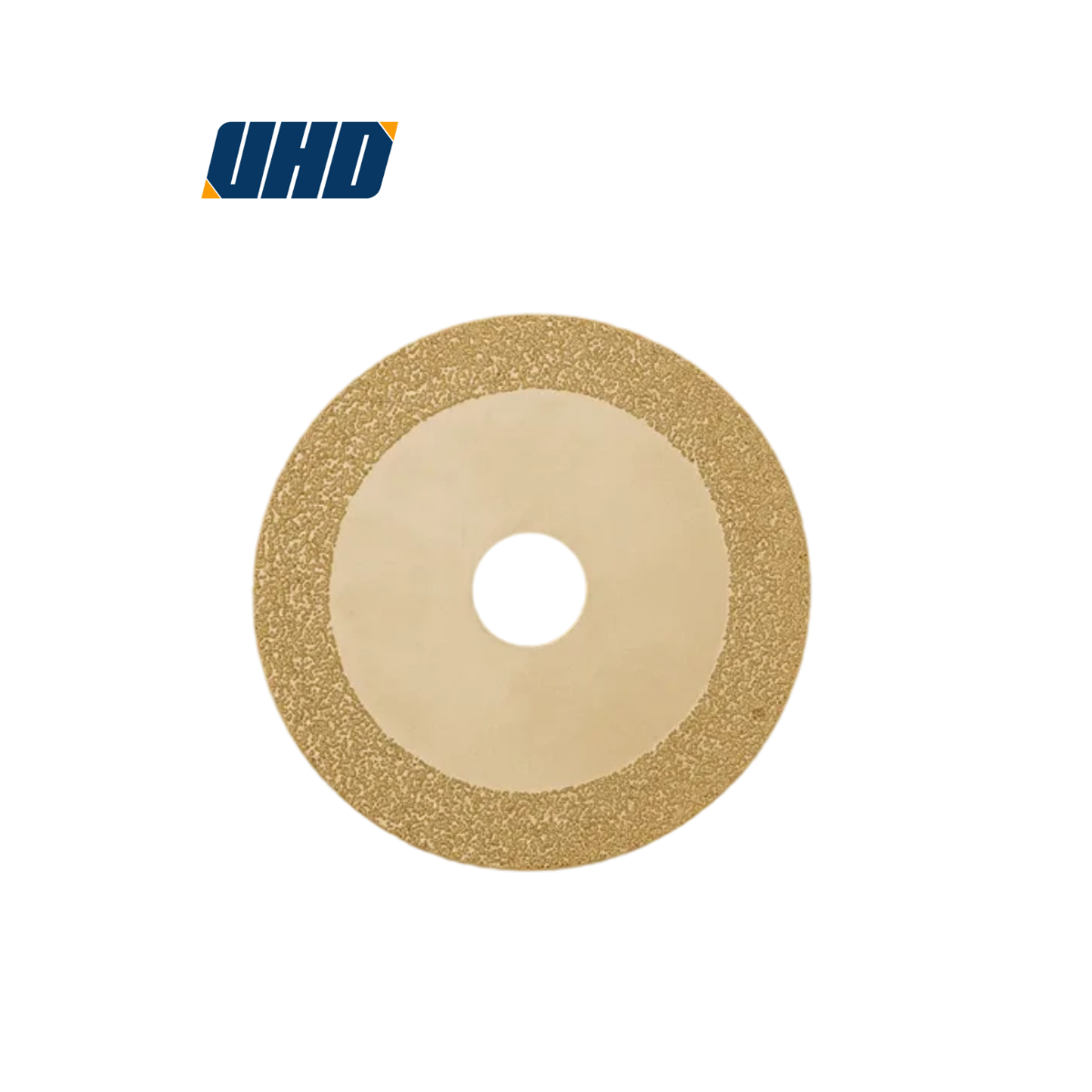
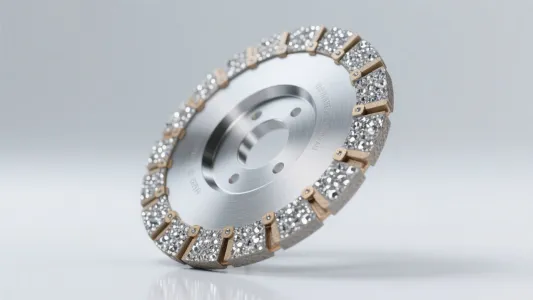
Vacuum brazing is often discussed as a “premium” manufacturing method, but its advantage is fundamentally technical: it creates a high-integrity metallurgical bond between diamond and substrate under controlled atmosphere, which reduces oxidation and improves wetting. For metal cutting, that bond integrity directly determines whether diamonds stay engaged under thermal spikes and intermittent load.
Compared with conventional plated tools, vacuum-brazed structures typically deliver stronger anchoring of the diamond grit. In practical shop-floor terms, stronger retention delays the onset of pull-out and “bald spots” that cause vibration and wandering cuts. In controlled trials on medium-carbon steel cut-off operations, vacuum-brazed diamond blades showed a 30–60% increase in usable cutting length before unacceptable feed force drift occurred, assuming consistent RPM and feed rate.
Oxygen control during brazing supports a cleaner interface and more predictable braze alloy behavior. This consistency translates into a more uniform distribution of cutting points and more stable wear. It is especially valuable in applications where thermal cycling is severe—short cuts, interrupted cuts, and thick-wall parts—where bond fatigue is a common end-of-life mechanism.
Durability is rarely improved by “harder is better” thinking. A durable cutting system is balanced: diamonds must fracture and renew edges at an appropriate rate, while the bond layer remains stable and the core resists deformation. The optimal combination varies by material hardness, thermal conductivity, and chip behavior.
| Work material | Typical cutting challenge | Recommended diamond/bond focus | Durability outcome (reference) |
|---|---|---|---|
| Carbon steel (medium) | Heat buildup, burr control | Stable braze layer + balanced grit size | +25–50% usable life vs basic plated (process-dependent) |
| Cast iron | Abrasive dust, micro-chipping | Higher impact tolerance + chip evacuation geometry | +20–45% life and steadier feed force |
| Stainless steel | Work hardening, heat tint | Heat management design + appropriate grit exposure | Reduced discoloration and fewer rework rejects |
| High-alloy / hardened parts | Edge stability under load | Stronger diamond retention + robust core stiffness | Lower segment loss risk under intermittent cuts |
Reference figures reflect common industrial observations under comparable RPM/feed and proper guarding/extraction; actual results vary with machine power, coolant strategy, and operator technique.
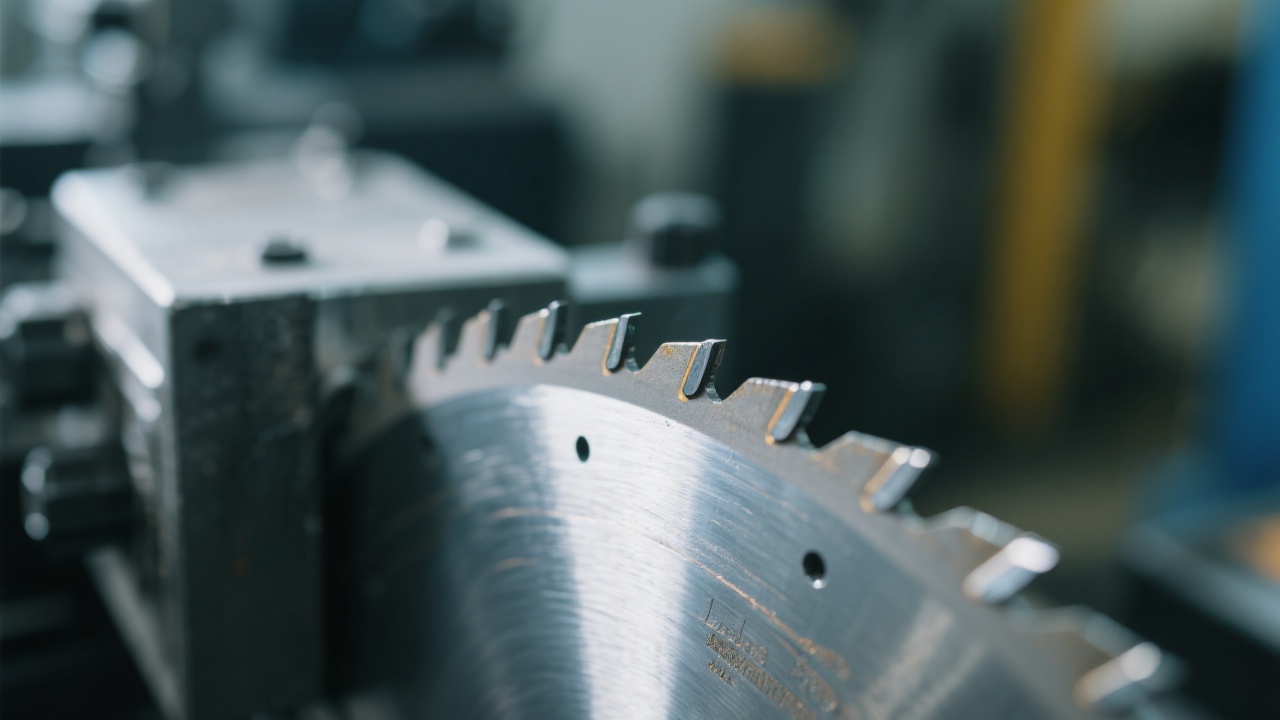
Even with excellent brazing quality, structural design determines whether the wheel runs cool, tracks straight, and maintains consistent kerf. The core is not a passive holder—it is a thermal and mechanical system that influences diamond exposure, vibration, and chip flow.
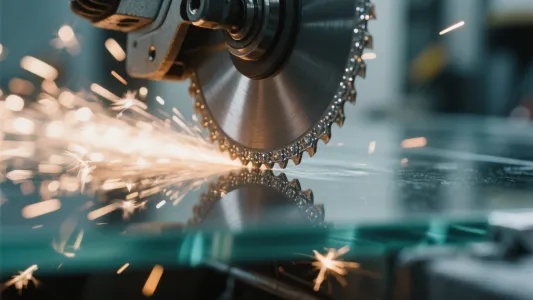
Heat is generated at the contact zone, then must be carried away through the rim and core. Slots and expansion features can reduce thermal stress and help stabilize flatness at operating temperature. In production comparisons on dry cut-off of cast components, blades with optimized heat-dissipation slot patterns reduced average rim temperature by approximately 60–120°C (measured by IR spot checks at consistent cycle time), which correlated with less glazing and more consistent cut time per part.
Radial runout and vibration accelerate bond fatigue and create uneven wear. A stiffer, better-balanced core helps keep cutting points engaged uniformly, which can reduce side rubbing and improve kerf stability. In one medium-sized fabrication plant cutting welded assemblies, improved runout control reduced the rate of “wander” re-cuts from 3.2% to 1.1% over a four-week period, primarily by stabilizing first-pass alignment.
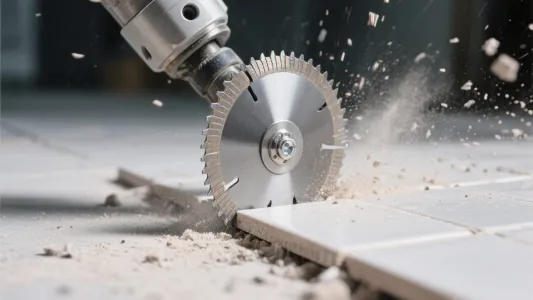
More aggressive profiles evacuate chips and reduce loading, but may sacrifice edge strength in interrupted cuts. For foundry gates and risers, a more impact-tolerant geometry often extends life even if peak cutting speed is slightly lower—because the blade avoids micro-fracture events that rapidly degrade performance.
Selection should start with the material and cut mode (continuous vs interrupted), then consider the machine’s power and the site’s dust-control strategy. The goal is not only a longer-lasting blade, but a blade that remains predictable—because predictability is what keeps production scheduling intact.
Prioritize stable diamond retention and a core design that minimizes heat concentration. If burr and discoloration are frequent, reduce rubbing by choosing a design that maintains edge exposure and chip clearance.
Focus on heat control and process discipline. Work hardening punishes dull edges; a wheel that stays sharp longer typically lowers tint and reduces secondary finishing.
Abrasive debris and intermittent impact are common. Use an impact-tolerant structure with efficient evacuation. Pair with effective extraction to keep dust from re-entering the cut.
Choose a system engineered for bond stability and core stiffness. These jobs often fail tools through shock and thermal cycling rather than gradual wear.
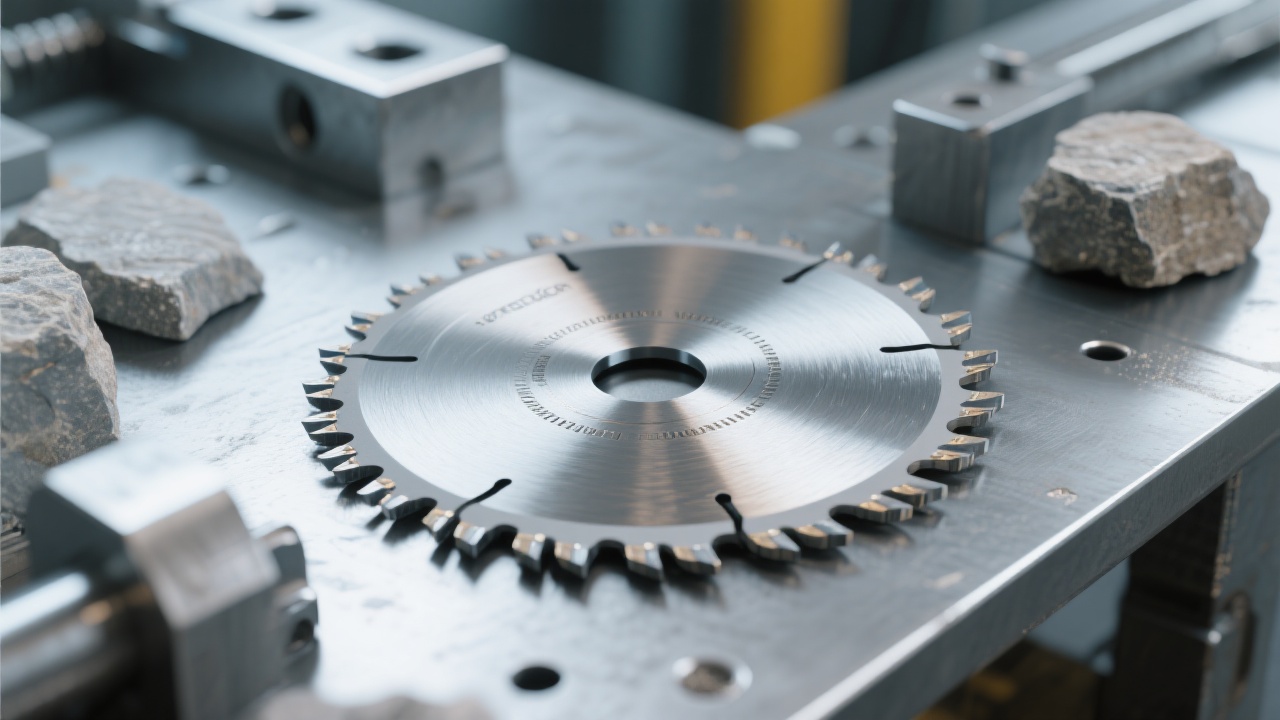
Durability improvements are amplified when process controls reduce heat and keep the cutting zone clean. While local regulations differ, most facilities share the same operational reality: less airborne particulate improves visibility, reduces housekeeping time, and lowers exposure risk. In addition, cooler cuts typically reduce metallurgical damage and make downstream inspection easier.
Excess pressure is a common “hidden” root cause of rapid dulling. When the wheel is forced, diamonds can fracture prematurely or the bond layer can fatigue. Plants that standardized operator technique (target feed windows and “no forcing” rules) often report 15–30% lower wheel consumption over a quarter, with fewer heat-related rejects.
Dust that lingers near the kerf can be re-cut, increasing friction. Effective extraction keeps the interface cleaner and can reduce visible airborne particulate. In one foundry gate-removal cell, improving hood positioning and maintaining filter performance reduced visible dust plume intensity by an estimated 25–35%, while also improving cut consistency.
Some metal cutting applications benefit from controlled cooling, but coolant strategy must match the blade design and safety requirements. Inappropriate coolant delivery can cause thermal shock cycles or slurry loading. A well-chosen wheel design that runs cooler in dry conditions can be a simpler, more predictable path for many operations.
A durable diamond cut-off wheel can still fail early if the machine setup or daily checks are neglected. The checklist below reflects common causes of premature wear in metal shops and is designed to be practical for supervisors and operators.
Consider a mid-volume metal fabrication workshop cutting mixed mild steel and stainless parts on a fixed schedule. After switching from a basic diamond solution to a vacuum-brazed, heat-optimized design and standardizing operator feed technique, the workshop tracked performance across comparable batches (same material thickness range, similar part geometry).
| Metric (batch-level) | Baseline wheel | Optimized vacuum-brazed design | Observed impact |
|---|---|---|---|
| Usable cutting length before change | ~420 m | ~650 m | +55% durability |
| Average cut time per part | 18.4 s | 15.6 s | -15% faster cycle time |
| Heat tint-related rework rate (stainless) | 2.6% | 1.3% | -50% rework incidence |
| Unplanned changeovers per week | 9 | 5 | -44% interruptions |
The operational lesson is consistent across industries: durability gains are most reliable when the cutting system is treated as a combination of bond integrity, thermal design, and process discipline. A blade that holds diamonds more effectively but runs hot will still deteriorate early; a cool-running core with poor retention will still lose cutting points.
For teams evaluating durability upgrades, the fastest path is a short technical matching exercise: work material, thickness, dry/wet preference, RPM, and whether cuts are continuous or interrupted. With those inputs, a vacuum-brazed design and blade geometry can be selected to reduce heat damage, stabilize cutting speed, and improve wheel life without overcomplicating the process.
Many plants use leading indicators: feed force trend, cut time drift, rim temperature spot checks, and the onset point of glazing. If cut time increases by ~10–15% under the same parameters, it often predicts accelerated wear and higher heat generation.
Repeated discoloration, rising burr height, and visible smoke despite stable material thickness are common signs. These typically appear before catastrophic failure and can be reduced by improved chip evacuation, a cooler-running core, and consistent feed.
When the cutting edge stays sharp and chips are evacuated efficiently, less energy turns into heat and fine particulate. Combined with proper extraction and guard setup, many operations see a noticeable reduction in visible airborne dust.

 412
|
412
|
 CNC automatic grinder
grinding wheel geometry
bowl type grinding wheel
碟型 grinding wheel
vacuum brazed grinding wheel
CNC automatic grinder
grinding wheel geometry
bowl type grinding wheel
碟型 grinding wheel
vacuum brazed grinding wheel
 333
|
Diamond saw blade detection
Extreme environment cutting
Cutting tool condition management
Portable detection methods
Saw blade performance evaluation
333
|
Diamond saw blade detection
Extreme environment cutting
Cutting tool condition management
Portable detection methods
Saw blade performance evaluation
 164
|
vacuum brazed diamond wheels
electroplated diamond wheels
high-end manufacturing grinding
thermal stability grinding wheels
diamond wheel bonding strength
164
|
vacuum brazed diamond wheels
electroplated diamond wheels
high-end manufacturing grinding
thermal stability grinding wheels
diamond wheel bonding strength
 42
|
diamond saw blade wear
extreme cutting conditions
casting industry tool maintenance
cutting efficiency improvement
blade lifespan extension
42
|
diamond saw blade wear
extreme cutting conditions
casting industry tool maintenance
cutting efficiency improvement
blade lifespan extension
 392
|
customized diamond grinding wheels for cast iron
diamond wheel selection guide
gray cast iron deburring solutions
precision machining tool design
high-speed cast iron grinding discs customization
392
|
customized diamond grinding wheels for cast iron
diamond wheel selection guide
gray cast iron deburring solutions
precision machining tool design
high-speed cast iron grinding discs customization






.png?x-oss-process=image/resize,m_fill,h_300,w_300/format,webp)


.png?x-oss-process=image/resize,m_fill,h_300,w_300/format,webp)