
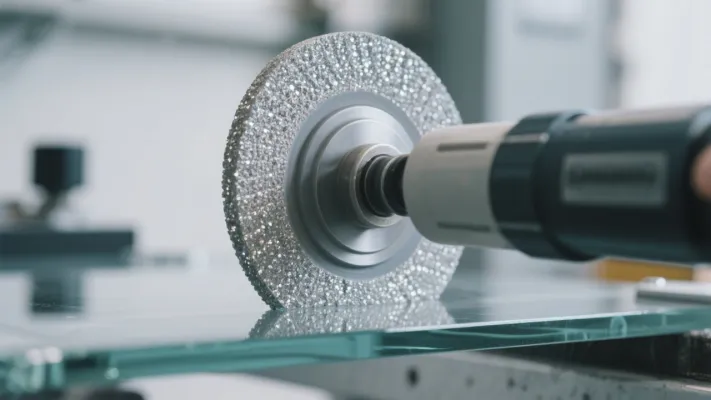
Gray cast iron is widely used in automotive, construction, and industrial machinery due to its excellent wear resistance and machinability. However, when cutting this material with diamond saw blades, operators often face a critical issue: blade chipping or catastrophic failure — known as “blowout” or “chipping.” According to field data from UHD’s technical support team, over 60% of premature blade failures in gray cast iron applications are directly linked to thermal stress buildup, improper grain distribution, or incorrect cutting parameters.
1. Thermal Stress Concentration: During high-speed cutting, heat accumulates rapidly at the cutting edge — especially in low-conductivity materials like gray cast iron. Without proper cooling, temperatures can exceed 600°C locally, causing micro-cracks in the metal bond matrix. These cracks propagate under load, leading to sudden chipping.
2. Inconsistent Grain Distribution: A blade with uneven diamond concentration (e.g., less than 30% or more than 70% loading) will experience inconsistent wear patterns. Our lab tests show that blades using 80–120 mesh diamond grits maintain optimal cutting performance while minimizing stress points — a key factor in extending blade life by up to 40% compared to coarser grades.
3. Suboptimal Cutting Parameters: High feed rates combined with fast spindle speeds create excessive friction and localized heating. Recommended settings include lower RPM (1,500–2,500) and increased feed per tooth (0.1–0.3 mm/tooth), which reduce heat generation and improve chip evacuation.
To prevent blade damage and ensure consistent cut quality, manufacturers should adopt a structured approach:
Real-world case study: A German foundry reduced blade replacement frequency by 55% after implementing these strategies — verified through UHD’s on-site monitoring system and post-failure analysis logs.
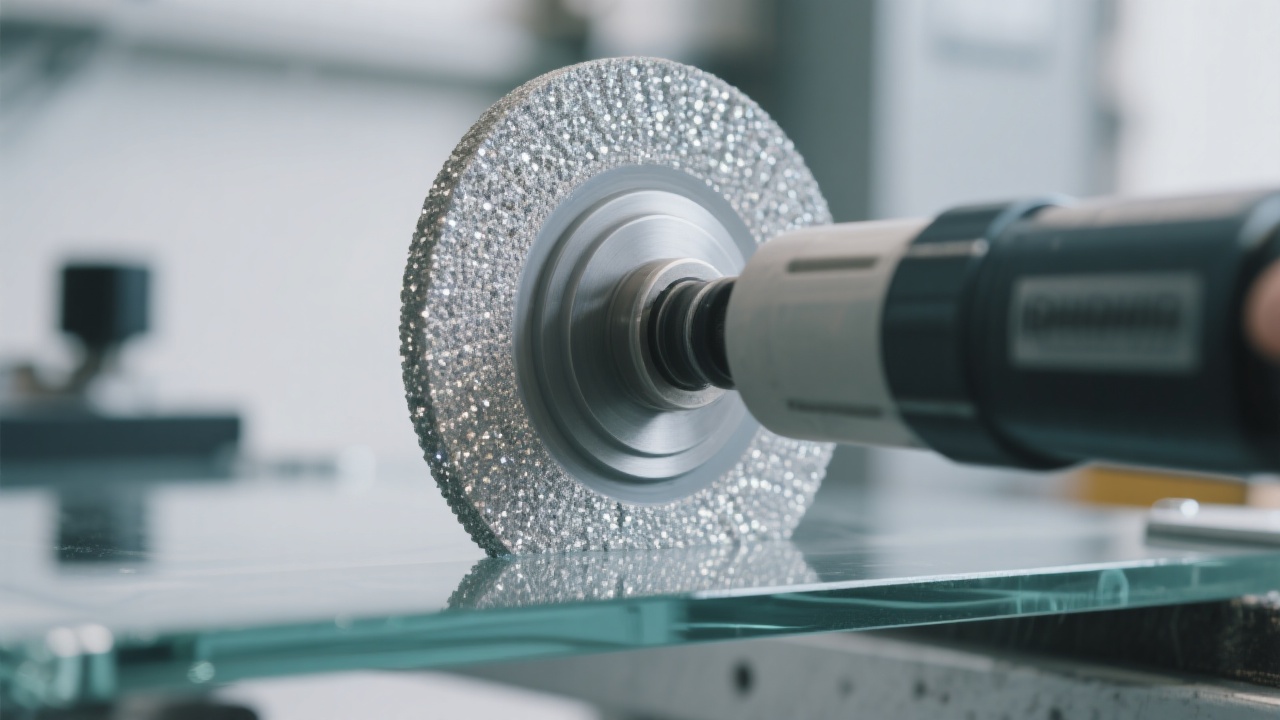
These techniques aren’t just theoretical — they’re proven in real production environments across North America, Europe, and Southeast Asia. Whether you're managing a small workshop or a large-scale casting operation, understanding how heat, grain structure, and parameter control interact is essential for reliable, safe cutting.
If you want to go deeper — including detailed thermal modeling charts, recommended blade specs, and custom-cutting strategy templates — we invite you to Get the Complete Technical Manual or schedule a free consultation with our engineering team.

 412
|
412
|
 CNC automatic grinder
grinding wheel geometry
bowl type grinding wheel
碟型 grinding wheel
vacuum brazed grinding wheel
CNC automatic grinder
grinding wheel geometry
bowl type grinding wheel
碟型 grinding wheel
vacuum brazed grinding wheel
 436
|
gray cast iron machining
diamond grinding wheels
parameter optimization
precision casting tools
tool life management
436
|
gray cast iron machining
diamond grinding wheels
parameter optimization
precision casting tools
tool life management
 333
|
Diamond saw blade detection
Extreme environment cutting
Cutting tool condition management
Portable detection methods
Saw blade performance evaluation
398
|
diamond saw blade monitoring
intermittent cutting techniques
saw blade performance testing
superabrasive tool maintenance
cutting efficiency optimization
333
|
Diamond saw blade detection
Extreme environment cutting
Cutting tool condition management
Portable detection methods
Saw blade performance evaluation
398
|
diamond saw blade monitoring
intermittent cutting techniques
saw blade performance testing
superabrasive tool maintenance
cutting efficiency optimization
 392
|
customized diamond grinding wheels for cast iron
diamond wheel selection guide
gray cast iron deburring solutions
precision machining tool design
high-speed cast iron grinding discs customization
392
|
customized diamond grinding wheels for cast iron
diamond wheel selection guide
gray cast iron deburring solutions
precision machining tool design
high-speed cast iron grinding discs customization







.png?x-oss-process=image/resize,m_fill,h_300,w_300/format,webp)


