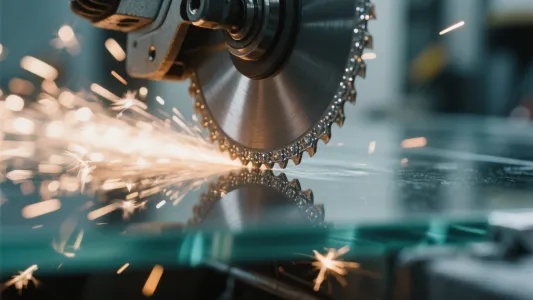
Effective cutting of gray cast iron demands more than just powerful machinery and standard blades. The frequent challenge of diamond saw blades chipping or fracturing—commonly known as blade edge chipping—can severely degrade cutting quality, safety, and operational costs. Understanding the underlying causes and implementing optimized blade selection and operational parameters ensure reliable, high-quality results in demanding industrial environments.
Blade edge chipping occurs when local stresses exceed the matrix and diamond grit bonding strength, leading to premature tool wear and material damage. Key factors include:
Case studies from leading foundries reveal common trends: blades with fine diamond grit below 80 mesh often prematurely chip due to insufficient bond strength, while those above 120 mesh reduce cutting efficiency. Experimental thermal imaging indicates hot spots exceeding 200°C at the blade-material interface during high-speed cuts without proper cooling.
Further lab tests demonstrate that blades exhibiting well-controlled grain distributions—predominantly in the 80-120 mesh range—maintain structural integrity during extended operations. Additionally, blade concentricity deviations greater than 0.03 mm correlate strongly with accelerated edge deterioration.
Based on industry feedback and technical analysis, the following strategies significantly improve blade life and cutting precision:
Leading foundry maintenance teams recommend routine inspection for micro-chipping signs during scheduled downtime. Minor edge damages can be recycled by controlled dressing techniques using synthetic abrasives, prolonging operational cycles before blade replacement. Moreover, enforcing safety protocols during blade change-outs prevents accidents arising from sudden failures.
A focus on operator training about cutting parameter implications and cooling management closes the feedback loop, empowering technicians to diagnose and adjust processes proactively.
| Parameter | Optimal Range | Impact on Performance |
|---|---|---|
| Diamond Grit Size | 80-120 mesh | Balance of wear resistance & cutting efficiency |
| Spindle Speed | 1000-1500 RPM | Reduces heat, extending blade life |
| Blade Concentricity | <0.02 mm | Prevents vibrations causing edge chipping |
| Coolant Temperature | Below 25°C | Maintains thermal stability and chip flushing |


 446
|
446
|
 diamond saw blade chipping
gray cast iron cutting
thermal stress control
cutting parameter optimization
foundry machining
diamond saw blade chipping
gray cast iron cutting
thermal stress control
cutting parameter optimization
foundry machining
 40
|
vacuum brazed diamond blades
eco-friendly cutting discs
metal cutting blade selection
diamond blade durability
industrial dust control solutions
40
|
vacuum brazed diamond blades
eco-friendly cutting discs
metal cutting blade selection
diamond blade durability
industrial dust control solutions
 42
|
diamond saw blade wear
extreme cutting conditions
casting industry tool maintenance
cutting efficiency improvement
blade lifespan extension
209
|
diamond saw blade chipping
gray cast iron cutting
thermal stress control
cutting parameter optimization
saw blade maintenance
42
|
diamond saw blade wear
extreme cutting conditions
casting industry tool maintenance
cutting efficiency improvement
blade lifespan extension
209
|
diamond saw blade chipping
gray cast iron cutting
thermal stress control
cutting parameter optimization
saw blade maintenance
 392
|
customized diamond grinding wheels for cast iron
diamond wheel selection guide
gray cast iron deburring solutions
precision machining tool design
high-speed cast iron grinding discs customization
392
|
customized diamond grinding wheels for cast iron
diamond wheel selection guide
gray cast iron deburring solutions
precision machining tool design
high-speed cast iron grinding discs customization





.png?x-oss-process=image/resize,m_fill,h_300,w_300/format,webp)