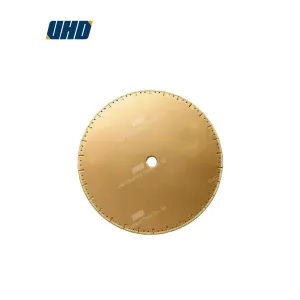
In high-temperature, high-vibration, or intermittent cutting, a diamond saw blade may not show performance decline through a single obvious sign. UHD Ultrahard Tools recommends monitoring several indicators together—and comparing them under consistent operating conditions—to help identify changes early and make more informed inspection or replacement decisions.
Before assessing a change, record the conditions that affect cutting: workpiece material, blade and machine setup, feed approach, cutting duration, and whether the operation is continuous or intermittent. Comparing observations from similar jobs makes trends more meaningful; differences in material or operating conditions can otherwise be mistaken for blade wear.
| Indicator | What to observe | Why it matters |
|---|---|---|
| Cutting sound | Changes in pitch, intensity, or consistency compared with the normal sound for the same operation. | A noticeable change can prompt a check of blade condition, workpiece restraint, or machine setup. |
| Temperature | Unusual heat around the cutting area or a rising temperature trend during comparable cuts. | Heat should be considered alongside cutting behavior and the conditions of the process. |
| Abrasive grain distribution | Visible changes in the cutting surface or distribution of exposed abrasive grains during a safe, stopped inspection. | Surface changes can provide context when investigating a shift in cutting performance. |
| Cut-surface quality and burr size | Changes in finish, edge consistency, or burr size on comparable workpieces. | These outcomes help show whether the cut is meeting the process requirement. |
| Cutting output per unit time | The amount of work completed over a consistent time period, recorded with the relevant operating conditions. | A sustained change can help identify a performance trend, but should not be interpreted in isolation. |
No single sound, temperature reading, surface feature, or output figure can establish blade condition in every application. Use changes as prompts for a closer assessment, taking account of the workpiece, machine, process, and applicable operating guidance. Do not rely on a universal threshold that has not been established for the specific setup.
A consistent record of cutting sound, temperature, abrasive grain distribution, cut-surface finish, burr size, and output per unit time can make performance changes easier to recognize in demanding cutting conditions. UHD Ultrahard Tools focuses on superhard material tools and diamond saw blades for industrial applications; monitoring observations alongside the requirements of the job can help operators assess when further inspection or a replacement decision is appropriate.
 183
|
 UHD Ultrahard Tools Co., Ltd cast iron dross removal resin-bond diamond grinding wheel ductile iron burr treatment industrial grinding tool selection
444
|
UHD Ultrahard Tools Co., Ltd cast iron automatic grinding vacuum brazed diamond grinding wheel selection multi-axis automatic grinding equipment matching custom grinding segment geometry
 143
|
UHD Ultrahard Tools diamond grinding disc for gray cast iron metal vacuum-brazed diamond tools gray cast iron precision finishing customizable grinding parameters
144
|
UHD Ultrahard Tools Co., Ltd. cast iron slag removal ductile iron deburring resin-bond diamond grinding wheel diamond grinding wheel selection
293
|
UHD Ultrahard Tools cast iron deslagging resin-bond diamond grinding wheels ductile iron deburring industrial grinding wheel procurement