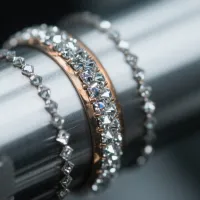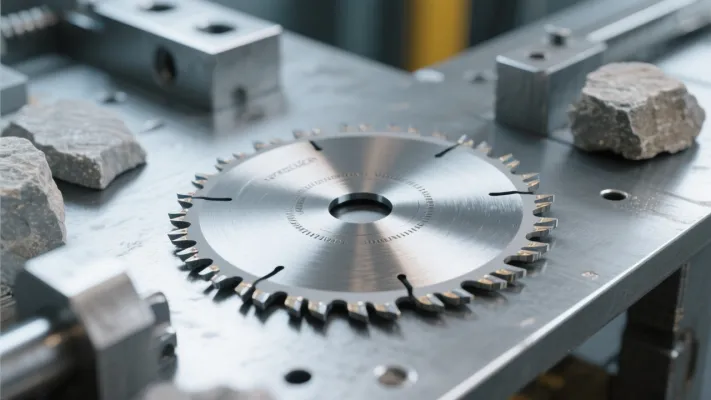
In industrial cutting environments—especially those involving high heat, intermittent operation, or vibration—the performance of diamond saw blades can degrade rapidly. Many technicians rely on intuition or fixed replacement schedules, leading to unnecessary downtime and cost overruns. This guide introduces three field-tested methods that require minimal tools but deliver actionable insights into blade health.
Even minor wear patterns on the diamond segments are often invisible to the naked eye. With a handheld digital microscope (e.g., 10x–50x magnification), inspect the surface for:
According to field data from UHD’s technical support team, 78% of premature blade failures were caught early using this method. A blade showing uniform grain structure with no exposed bond material typically retains at least 60–70% of its original cutting life.
A healthy diamond blade produces a consistent, low-pitched hum during cutting. Sudden changes—such as high-frequency squealing or irregular thumping—can indicate:
Our engineers observed that operators who trained themselves to recognize these sound cues reduced unplanned stops by up to 40%. It’s not just about noise—it’s about pattern recognition.
During normal operation, the cutting edge should stay below 180°C (356°F). If it exceeds 220°C (428°F) consistently, you’re likely experiencing:
UHD’s own testing shows that blades operating above 220°C for more than 3 minutes per cycle show accelerated wear—often requiring replacement before reaching expected lifespan.
Combining all three techniques gives a clear picture of blade condition. For example, if a blade has good visual integrity but emits unusual sounds and runs hot, the issue may be related to machine setup rather than the blade itself. This prevents unnecessary replacements and saves costs.
Discover how UHD’s precision-engineered diamond saw blades maintain optimal performance even under extreme conditions—without compromising safety or productivity.
Explore UHD Diamond Blades Now

 93
|
93
|
 eco-friendly cutting disc
vacuum brazed diamond cutting disc
metalworking durability
industrial dust control
CE certified cutting disc
eco-friendly cutting disc
vacuum brazed diamond cutting disc
metalworking durability
industrial dust control
CE certified cutting disc
 157
|
gray cast iron dust control
dust-free diamond grinding disk
industrial air quality improvement
green manufacturing technology
occupational health protection
157
|
gray cast iron dust control
dust-free diamond grinding disk
industrial air quality improvement
green manufacturing technology
occupational health protection
 436
|
gray cast iron machining
diamond grinding wheels
parameter optimization
precision casting tools
tool life management
436
|
gray cast iron machining
diamond grinding wheels
parameter optimization
precision casting tools
tool life management
 389
|
diamond saw blade chipping
gray cast iron cutting optimization
thermal stress control in cutting
cutting parameter settings for cast iron
UHD diamond tools
389
|
diamond saw blade chipping
gray cast iron cutting optimization
thermal stress control in cutting
cutting parameter settings for cast iron
UHD diamond tools
 134
|
custom diamond grinding wheel
cast iron machining efficiency
crankshaft grinding solution
chip removal groove design
automotive component grinding
134
|
custom diamond grinding wheel
cast iron machining efficiency
crankshaft grinding solution
chip removal groove design
automotive component grinding







.png?x-oss-process=image/resize,m_fill,h_300,w_300/format,webp)