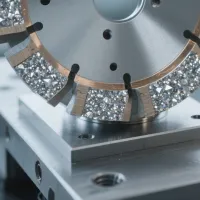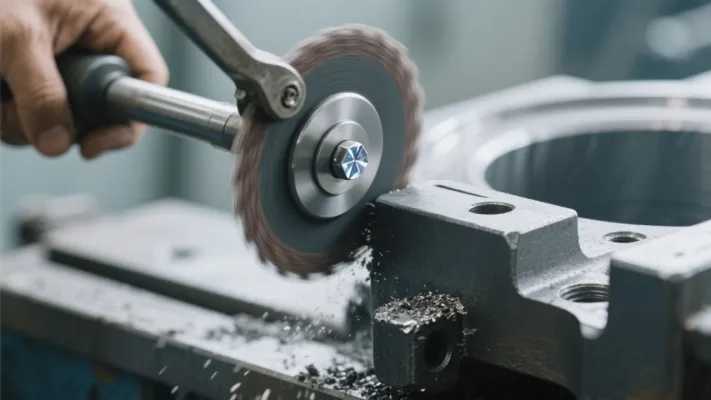
In precision machining of ductile iron components—commonly used in automotive, aerospace, and heavy machinery industries—the deburring process remains a critical bottleneck. Traditional methods often result in inconsistent surface finishes, frequent tool replacement, and increased production downtime. According to industry data from the International Association of Machining Engineers (IAME), up to 35% of rework costs in metalworking facilities stem from poor deburring quality.
Conventional aluminum oxide or silicon carbide wheels struggle under high-load conditions typical in ductile iron grinding. They wear rapidly—often lasting only 4–6 hours before requiring dressing—and fail to maintain consistent cutting performance. This leads to variable surface roughness (Ra values exceeding 3.5 µm) and excessive dust generation, posing both safety and compliance risks in modern workshops.
Key Insight: A 2023 study by the German Institute for Manufacturing Technology found that resin-bonded diamond wheels can reduce average surface roughness by up to 62% compared to conventional abrasives when used at optimized feed rates and spindle speeds.
The breakthrough lies in combining synthetic diamond grits with advanced phenolic-resin binders. These wheels retain sharp cutting edges even during prolonged operation due to their superior thermal stability and mechanical strength. At a standard RPM of 3,000–4,500 and an optimal feed rate of 0.05–0.1 mm/tooth, they deliver consistent Ra values between 0.8–1.2 µm, far below the industry threshold of 2.0 µm for fine finish applications.
Moreover, these wheels generate up to 40% less airborne particulate matter than traditional alternatives—a major advantage for ISO 14001-certified factories aiming to improve workplace air quality and reduce environmental impact.
Client Testimonial: “After switching to resin-bonded diamond wheels, our deburring cycle time dropped from 12 minutes per part to just 7.5 minutes—with no loss in surface integrity.” — Mechanical Engineering Lead, Automotive Tier-1 Supplier, Germany
We offer tailored wheel geometries based on your specific workpiece shape and material hardness (typically ranging from 200–350 HB). Whether it’s internal chamfering, external edge finishing, or complex contour deburring, our engineering team ensures precise fit-for-purpose design.
A global network of certified service partners enables rapid response times—within 24–48 hours for urgent replacements or technical support—minimizing machine idle time across all major manufacturing hubs including North America, Europe, Southeast Asia, and the Middle East.
Low-noise operation (≤75 dB(A)) and reduced vibration not only enhance operator comfort but also meet OSHA and EU noise regulations. With fewer dust emissions and longer tool life, this solution supports lean manufacturing goals while reducing waste and labor costs over time.
Ready to optimize your ductile iron deburring process?
Explore Custom Wheel Solutions for Your Application

 451
|
451
|
 Diamond saw blade detection
High - temperature saw blade state monitoring
Cutting tool performance evaluation
Portable microscope application
Infrared temperature measurement for cutting tools
376
|
diamond saw blade chipping
grey cast iron cutting optimization
saw blade thermal stress control
cutting parameter settings
foundry cutting solutions
188
|
diamond saw blade wear assessment
cutting surface quality inspection
saw blade maintenance in extreme working environments
saw blade condition diagnosis methods
super - hard material tool usage skills
333
|
Diamond saw blade detection
Extreme environment cutting
Cutting tool condition management
Portable detection methods
Saw blade performance evaluation
99
|
diamond saw blade chipping
gray cast iron cutting optimization
saw blade thermal stress
cutting parameter adjustment
diamond grain size selection
Diamond saw blade detection
High - temperature saw blade state monitoring
Cutting tool performance evaluation
Portable microscope application
Infrared temperature measurement for cutting tools
376
|
diamond saw blade chipping
grey cast iron cutting optimization
saw blade thermal stress control
cutting parameter settings
foundry cutting solutions
188
|
diamond saw blade wear assessment
cutting surface quality inspection
saw blade maintenance in extreme working environments
saw blade condition diagnosis methods
super - hard material tool usage skills
333
|
Diamond saw blade detection
Extreme environment cutting
Cutting tool condition management
Portable detection methods
Saw blade performance evaluation
99
|
diamond saw blade chipping
gray cast iron cutting optimization
saw blade thermal stress
cutting parameter adjustment
diamond grain size selection








.png?x-oss-process=image/resize,m_fill,h_300,w_300/format,webp)