
Vacuum brazed diamond grinding wheels are designed for efficient, stable grinding on cast iron with multi-axis automatic grinding equipment. Proper inspection, installation, parameter adjustment, cleaning, and wear monitoring help technicians maintain consistent processing performance and make informed replacement decisions.
Practical guidance: Actual operating parameters must be verified against the equipment requirements, product documentation, wheel specifications, and current processing conditions. The practices below are intended as general operational guidance for professional users.
Cast iron grinding can generate abrasive dust and place continuous demands on the grinding tool, equipment, and workholding system. In automatic multi-axis applications, stable wheel condition is particularly important because changes in wheel wear, coolant or cleaning conditions, feed movement, and workpiece positioning may influence grinding consistency.
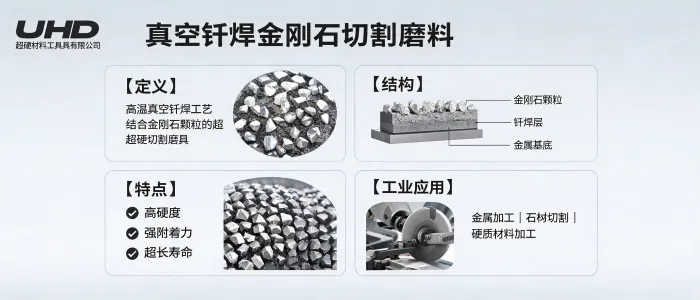
UHD Ultrahard Tools Co., Ltd. develops vacuum brazed diamond grinding tools for metal processing applications. The vacuum brazing process firmly fixes diamond particles to the working surface, supporting wear resistance and extended tool life. Correct operating discipline remains essential to use these characteristics effectively.
Automatic grinding performance depends on the relationship between wheel speed, feed movement, grinding depth, contact area, workpiece geometry, and machine rigidity. Rather than changing several settings at once, adjust one relevant factor at a time and record the effect on grinding efficiency, surface condition, heat, vibration, and wheel wear.
| Operating factor | What to observe during adjustment |
|---|---|
| Wheel speed | Confirm that the selected speed remains within the wheel and equipment requirements. Observe vibration, heat, grinding stability, and surface results. |
| Feed movement | Balance productivity with stable contact. Excessive feed may increase load, vibration, or uneven wear. |
| Grinding depth | Use a controlled depth appropriate to the workpiece and process. Excessive engagement can affect heat generation, tool loading, and dimensional consistency. |
| Axis coordination | Check that multi-axis movement follows the intended path and maintains consistent wheel contact across the grinding area. |
Important: UHD does not recommend using generic settings without validation. The correct parameters should be established through the specific machine, wheel specification, cast iron grade, workpiece geometry, and required finish.
Cast iron grinding produces particles that may accumulate around the wheel, machine enclosure, workholding area, and moving axes. Regular cleaning supports reliable automatic operation and makes it easier to identify changes in wheel condition.
Wear monitoring should combine visual inspection with process feedback. A change in one indicator does not always identify the cause, so operators should consider the wheel, machine, workpiece, and operating parameters together.
Observe changes in the brazed working layer, diamond exposure, contamination, damage, and the overall wheel profile.
Track changes in grinding time, surface condition, dimensional consistency, vibration, heat, and machine response.
Record wheel identification, operating conditions, inspection findings, cleaning actions, and replacement decisions for process comparison.
Replacement should be considered when the wheel no longer meets the required grinding performance, when damage or unsafe conditions are identified, or when the available working layer and wheel profile are no longer suitable for the application. The decision should follow the product documentation and the responsible technician’s assessment.
| Observed condition | Points to check |
|---|---|
| Increased vibration or unstable grinding | Check wheel mounting, spindle and fixture condition, workpiece security, machine rigidity, axis movement, and whether the selected operating conditions are appropriate. |
| Unexpected surface variation | Review wheel wear, contact path, feed movement, grinding depth, workpiece positioning, and the consistency of the automatic program. |
| Excessive heat or discoloration | Check wheel condition, contact load, grinding depth, feed, cleaning or coolant arrangements, and the suitability of the process for the workpiece. |
| Reduced grinding efficiency | Inspect for wheel wear, contamination, unsuitable parameters, incorrect alignment, or a change in workpiece material and geometry. |
| Abnormal noise or visible damage | Stop the equipment, isolate it according to site procedures, and inspect the wheel and machine before any further operation. |
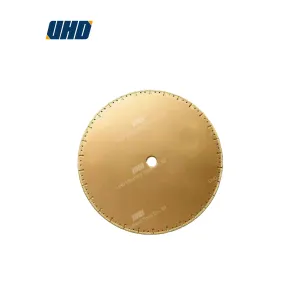
UHD’s vacuum brazed diamond grinding wheel range includes UDW455, UDW405, UDW355, UDW305, and UDW255 sizes. Selection should be based on equipment compatibility, workpiece characteristics, required grinding path, and the intended process conditions rather than size alone.
For application-specific requirements, UHD can support discussions involving wheel specifications, customized pipe segment geometry, technical information, and application engineering guidance. This helps connect the grinding tool with the actual automatic grinding process and metalworking objective.
UHD Ultrahard Tools Co., Ltd. focuses on the development, production, and supply of superhard material tools for industrial customers. Its vacuum brazed diamond grinding wheels are intended to support efficient and stable grinding on automatic equipment, while product selection and operating conditions should be confirmed for each application.
Share the machine configuration, workpiece material and geometry, current wheel information, grinding objective, and observed operating issue with the UHD team to support a more targeted technical discussion.

 41
|
41
|
 UHD Ultrahard Tools Co., Ltd. ultrahard material tools vacuum brazed diamond abrasives metalworking tools stone processing tools
 234
|
UHD Ultrahard Tools superhard material tools diamond tools abrasive tools vacuum-brazed diamond
234
|
UHD Ultrahard Tools superhard material tools diamond tools abrasive tools vacuum-brazed diamond
 30
|
UHD Ultrahard Tools vacuum-brazed diamond tools diamond cutting abrasives superabrasive tool selection metal and stone processing
30
|
UHD Ultrahard Tools vacuum-brazed diamond tools diamond cutting abrasives superabrasive tool selection metal and stone processing
 447
|
UHD Ultrahard Tools Co., Ltd hand diamond grinding wheel diamond tools industrial processing solutions ultrahard material products
447
|
UHD Ultrahard Tools Co., Ltd hand diamond grinding wheel diamond tools industrial processing solutions ultrahard material products
 65
|
UHD Ultrahard Tools Co., Ltd. superhard material tools vacuum brazed diamond tools metal and stone processing tool selection
65
|
UHD Ultrahard Tools Co., Ltd. superhard material tools vacuum brazed diamond tools metal and stone processing tool selection







.png?x-oss-process=image/resize,m_fill,h_300,w_300/format,webp)


