Every year, thousands of workers in metal fabrication plants are exposed to airborne particles from cutting operations — not just dust, but also harmful fumes and fine particulates that can lead to long-term respiratory issues. According to OSHA (Occupational Safety and Health Administration), over 70% of industrial accidents related to air quality stem from inadequate dust control in machining environments.
In the past, many factories treated dust as a nuisance rather than a systemic risk. But today, with stricter occupational health standards globally — including updated ISO 45001 and EU REACH regulations — ignoring dust emissions isn't just risky; it's costly. A recent study by the National Institute for Occupational Safety and Health (NIOSH) found that poorly managed dust environments reduce worker productivity by up to 15%, increase absenteeism, and raise insurance premiums.
For shop floor managers, this means more frequent breakdowns due to equipment clogging. For procurement officers, it’s about compliance audits failing. And for plant owners? It’s reputational damage if inspections reveal violations — especially in markets like the U.S., Germany, or UAE where environmental compliance is non-negotiable.
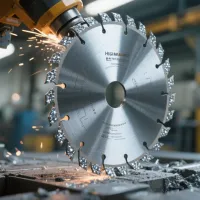
Traditional segmented blades often use resin binders that release volatile organic compounds (VOCs) during high-speed cutting — contributing to both odor and airborne particle loads. In contrast, UHD’s vacuum-brazed diamond blades eliminate these issues entirely:
Data shows that using UHD vacuum-brazed blades reduces average dust concentration from ~12 mg/m³ to under 3 mg/m³ — well below OSHA’s permissible exposure limit (PEL) of 5 mg/m³ for inhalable dust. This isn’t just a technical win — it’s a compliance and safety milestone.
Even with better tools, you need a full-system approach:
Pro Tip: Create a “Dust Log” spreadsheet tracking daily concentrations, blade usage, and maintenance schedules. Over time, this becomes your most valuable tool for predicting failures and optimizing workflows.
Emerging technologies like IoT-enabled dust sensors and AI-powered predictive analytics are making real-time monitoring affordable and actionable. Companies adopting these systems report 30–50% faster response times to air quality changes — turning reactive fixes into proactive management.
With new regulations on the horizon — particularly in Europe and Asia-Pacific — now is the ideal moment to evaluate your current setup. Whether you're a production supervisor, a facility manager, or a purchasing agent, there's no better time to invest in cleaner, safer, smarter cutting practices.

 157
|
157
|
 gray cast iron dust control
dust-free diamond grinding disk
industrial air quality improvement
green manufacturing technology
occupational health protection
gray cast iron dust control
dust-free diamond grinding disk
industrial air quality improvement
green manufacturing technology
occupational health protection
 485
|
diamond saw blade wear mechanism
extreme condition cutting tools
casting workshop cutting solutions
diamond blade lifespan extension
coolant management for diamond tools
485
|
diamond saw blade wear mechanism
extreme condition cutting tools
casting workshop cutting solutions
diamond blade lifespan extension
coolant management for diamond tools
 241
|
ductile cast iron deburring
resin-bonded diamond wheel
efficient deburring process
precision surface finishing
low-noise grinding
241
|
ductile cast iron deburring
resin-bonded diamond wheel
efficient deburring process
precision surface finishing
low-noise grinding
 66
|
diamond cutting blade durability
vacuum brazing technology
metal cutting blade design
diamond blade material selection
diamond cutting blade maintenance
66
|
diamond cutting blade durability
vacuum brazing technology
metal cutting blade design
diamond blade material selection
diamond cutting blade maintenance
 53
|
diamond wheel geometry
ductile iron deburring
resin-bonded diamond wheels
efficient grinding technology
customized abrasive solutions
53
|
diamond wheel geometry
ductile iron deburring
resin-bonded diamond wheels
efficient grinding technology
customized abrasive solutions








.png?x-oss-process=image/resize,m_fill,h_300,w_300/format,webp)

.png?x-oss-process=image/resize,m_fill,h_200,w_200/format,webp)