Metal Cutting Dust Control: Reduce Shop Emissions with Vacuum Brazed Diamond Cutting Blades
2026-02-17
UHD
Application Tips
Metal and foundry cutting operations can generate fine particulate matter and unpleasant fumes that affect worker health, equipment reliability, and regulatory compliance. This article explains the primary sources of cutting dust and odor in industrial metal cutting, then focuses on how vacuum brazed UHD diamond cutting blades help reduce harmful emissions. By eliminating resin-bond volatilization and using an optimized brazed diamond structure for cleaner, more stable cutting, these blades can lower airborne dust and odor intensity while extending service life compared with conventional abrasive wheels. The guide also includes practical, shop-floor best practices—local exhaust ventilation design considerations, PPE selection, and recommended monitoring frequency—supported by real-world comparisons and workplace data. Finally, it summarizes relevant dust and fume control requirements and highlights the shift toward Industry 4.0 dust sensing and intelligent compliance tracking to support safer, greener manufacturing.
Metal Cutting Dust Control in Foundries & Fabrication: A Practical Path to Lower Emissions
In metal fabrication and casting plants, cutting is often treated as a productivity step—until dust complaints rise, odor spreads across the workshop, or an audit flags airborne particulates. The reality is simple: every abrasive cut releases a mix of fine particles and by-products that can harm workers, contaminate equipment, and trigger compliance risk. This guide explains how vacuum brazed UHD diamond cutting blades can reduce dust and unpleasant odor at the source, and how to pair the right blade with ventilation, PPE, and monitoring to build a defensible dust-control system.
1) What’s Really in Cutting “Dust”—and Why It Becomes a Business Risk
Cutting dust is not just “dirt.” In foundry cleaning lines and fabrication bays, it commonly includes respirable particulates (PM10 and PM2.5), metal fines (iron, manganese, chromium depending on alloy), and abrasive residues. When conventional resin-bonded abrasive wheels heat up, they may also release burnt odor and volatile decomposition by-products, especially during dry cutting and high-duty cycles.
Health & operational impacts commonly observed on shop floors
Respiratory exposure: Fine particles stay airborne longer and penetrate deeper into lungs, increasing long-term risk.
Odor complaints: “Burning resin” smell reduces comfort and can indicate uncontrolled thermal decomposition.
Secondary contamination: Dust settles on motors, bearings, sensors, and electrical cabinets, accelerating wear and downtime.
Compliance pressure: Auditors increasingly ask for documented exposure controls and measurement records.
In many facilities, the cost is not limited to PPE and cleaning. A dust event can disrupt production schedules, trigger unplanned maintenance, and complicate customer audits—especially when selling into automotive, energy, or infrastructure supply chains where EHS transparency matters.
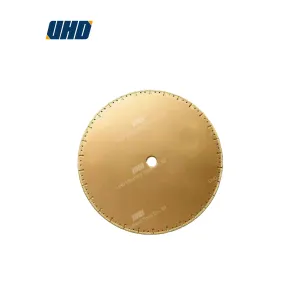
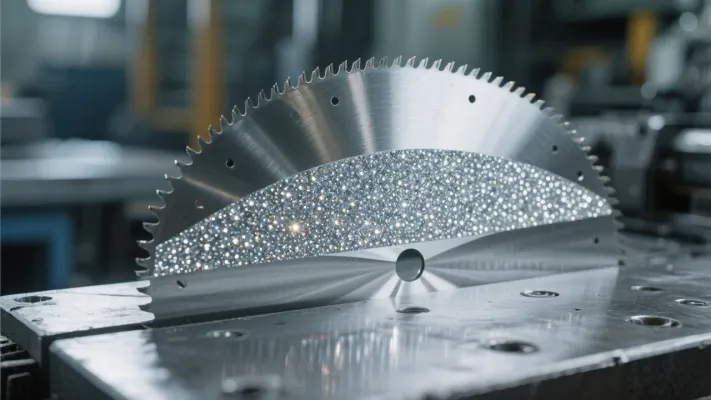
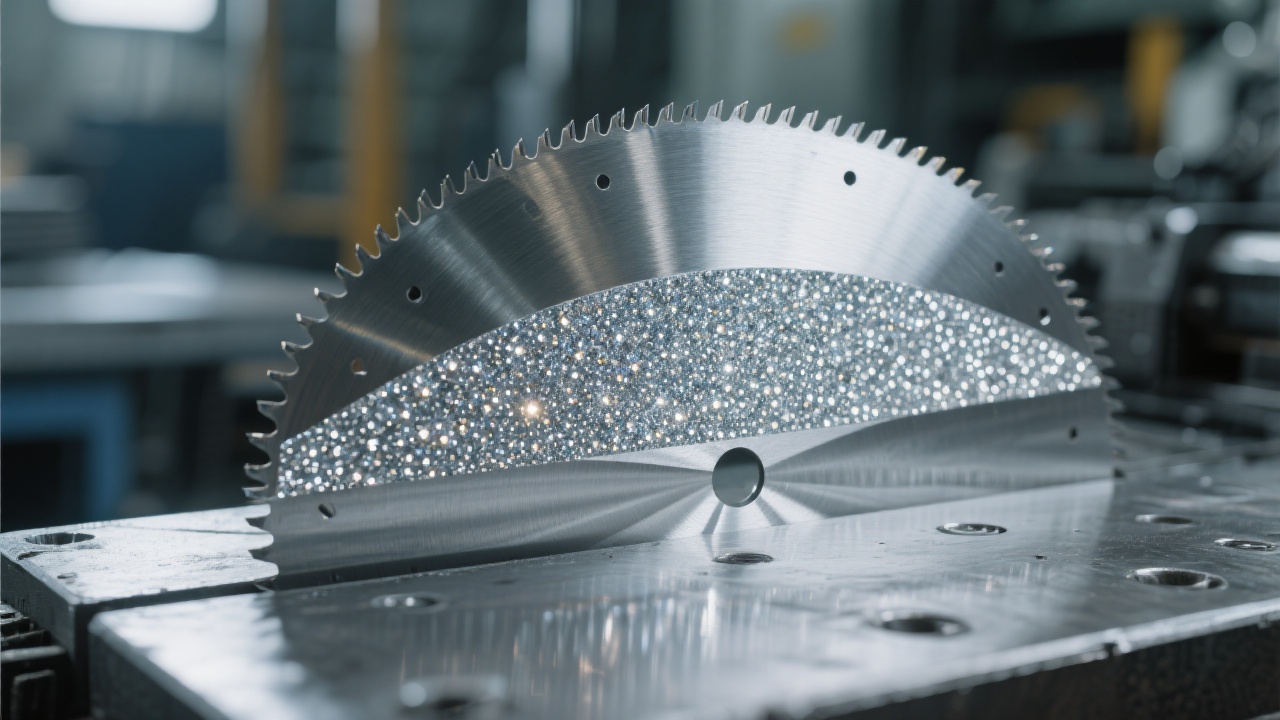
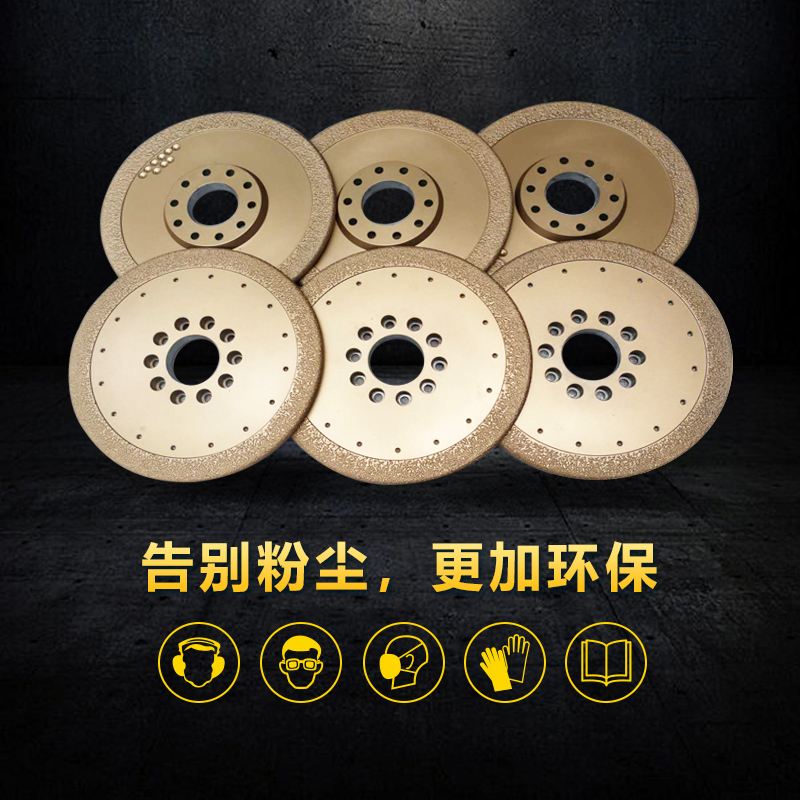
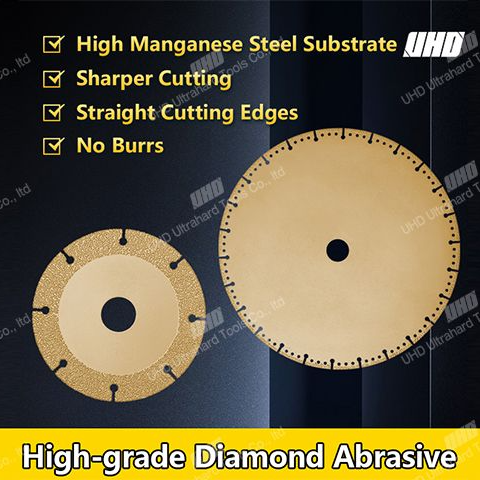
The core shift is the bonding method. Traditional abrasive cutting discs rely heavily on resin bonds. Under heat and friction, resin components can degrade, contributing to odor and additional airborne by-products. In contrast, vacuum brazing bonds diamond grits to the steel body at high temperature in a vacuum environment, producing a stable interface and consistent grit exposure.
Key mechanism: no resin volatilization
With vacuum brazed UHD blades, there is no resin layer designed to wear away. That means fewer burnt-organic odors during dry cutting and less secondary “smoke-like” haze commonly noticed near the operator zone.
Key mechanism: efficient chip formation
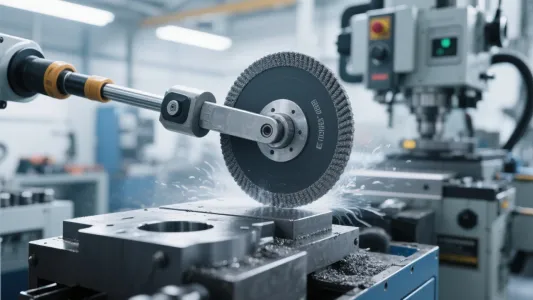
Optimized grit exposure and cutting geometry help produce more defined chips instead of excessive micro-fractured fines. In practice, this can shift part of the waste from “floating dust” to “collectable debris.”
UHD (ultra heavy duty) designs typically emphasize body stiffness, thermal stability, and grit retention. In metal and casting operations where duty cycles are long and material is inconsistent, the benefit is not just speed—it is more controllable emissions and more predictable wear.
3) Data Snapshot: Traditional Disc vs. UHD Vacuum Brazed Diamond Blade
The exact results depend on alloy type, cut depth, rpm, tool guarding, and extraction design. Still, factories that switch from resin-bonded abrasive wheels to vacuum brazed UHD diamond blades often report measurable changes. The following figures are practical reference ranges observed in industrial settings (dry cutting with local extraction at the guard).
Metric (Dry Cutting)
Resin-Bonded Abrasive Cut-Off Wheel
Vacuum Brazed UHD Diamond Cutting Blade
Respirable dust near operator (mg/m³, task-based)
~2.5–6.0 mg/m³
~1.2–3.5 mg/m³ (commonly 25–50% lower)
Odor intensity (0–10 operator rating)
6–9 (burnt-resin smell typical)
2–5 (lower organic odor; more “hot metal” profile)
Blade life (relative, same workload)
1.0× baseline
2.0–5.0× typical range (depends on material and rpm control)
Dust cleanup time (per shift)
Higher (more fine settling)
Often reduced due to fewer fines and steadier cutting
A mid-size casting workshop in Southeast Asia reported that after switching high-frequency cutoff stations to vacuum brazed UHD blades and adding a simple capture hood at the guard, their task-based respirable dust readings dropped from ~4.8 mg/m³ to ~2.7 mg/m³ over two weeks of repeat measurements, while operator odor complaints decreased noticeably. The same station also extended blade change intervals from multiple times per shift to once every 1–2 days, improving continuity and reducing exposure peaks during change-outs.
Global requirements vary, but supply chains and auditors increasingly align on the same idea: control airborne exposure and keep records. Commonly referenced frameworks include:
OSHA (U.S.) Permissible Exposure Limits (PELs) for metal particulates and related substances; housekeeping expectations for dust accumulation in production areas.
NIOSH / ACGIH Recommended exposure limits (RELs) and TLVs often used as internal corporate targets for respirable dust and specific metals.
EU Framework Directive 89/391/EEC (and country-level implementation) requiring risk assessment, prevention, and worker protection; many plants use EN/ISO-aligned monitoring procedures.
ISO 45001 Occupational health & safety management systems—driving documentation, competence, and continuous improvement for exposure control.
For many exporters, the immediate trigger is not a government inspection—it is an automotive or industrial customer audit that requests air monitoring reports, PPE policy, and corrective actions.
Upgrading to a vacuum brazed UHD diamond cutting blade is a strong source-control step, but stable results require a system approach. Below is a practical checklist used in metal and foundry cutting stations.
A) Capture and airflow (the “first meter” matters)
Place extraction as close as possible to the point of generation—ideally integrated with the tool guard or a compact hood. Many plants target 0.5–1.0 m/s capture velocity at the emission point for cutting tasks, then validate with smoke tests and dust readings.
Use spark-resistant pre-separation or a cyclone stage before fine filters in high-spark applications.
Keep duct runs short, avoid sharp bends, and maintain consistent diameter to reduce pressure losses.
Treat “general ventilation” as secondary—capture is the primary defense.
B) PPE that operators actually wear
Even with upgraded blades and extraction, task peaks happen—especially during awkward cuts. Most plants standardize:
Respiratory protection: FFP2/FFP3 (EU) or N95/N99 (U.S.) as baseline depending on risk assessment; elastomeric respirators for heavy tasks.
Eye/face protection: sealed goggles or face shields appropriate for sparks and chips.
Hearing protection: cutting often exceeds 85 dBA under load; verify by measurement.
C) Measurement frequency: keep it simple, keep it credible
Personal exposure sampling (third-party or internal)
Quarterly / semi-annually
Compliance-grade evidence
6) The Industrial 4.0 Angle: Smarter Cutting Safety Without Slowing Production
Plants moving toward Industry 4.0 are increasingly adding low-friction monitoring: differential pressure sensors across filters, airflow alarms, and portable dust meters logged into EHS dashboards. The operational benefit is not just reporting—it is preventing drift. When extraction performance drops 15–30% due to a clogged filter or duct leak, exposure can increase quietly until operators complain.
Vacuum brazed UHD diamond blades fit this “stable process” mindset because they typically deliver more consistent cutting behavior across the blade life, reducing the variability that makes dust control hard. Combined with basic telemetry, the cutting station becomes easier to manage: fewer surprise peaks, fewer emergency cleanups, and clearer evidence for audits.
Need a clearer view of your workshop’s dust risk?
Click below to learn how to evaluate cutting-station emissions and whether a vacuum brazed UHD diamond cutting blade can reduce dust and odor in your specific process.


.png?x-oss-process=image/resize,m_fill,h_300,w_300/format,webp)