Gray cast iron is a widely used material in the mechanical manufacturing and precision casting industries due to its excellent casting properties, good vibration damping, and low cost. However, its unique graphite structure and high hardness make it a challenging material to machine. Traditional resin - bonded grinding wheels have long been used in gray cast iron machining, but they come with significant limitations.
Resin - bonded grinding wheels often struggle with rapid wear, especially when dealing with the hard and abrasive nature of gray cast iron. The bonding strength of resin is relatively low, which leads to the premature loss of abrasive grains. This not only shortens the tool life but also results in inconsistent surface quality during machining. In some cases, the tool may need to be replaced every few hours of continuous operation, which significantly increases the production cost and reduces efficiency.
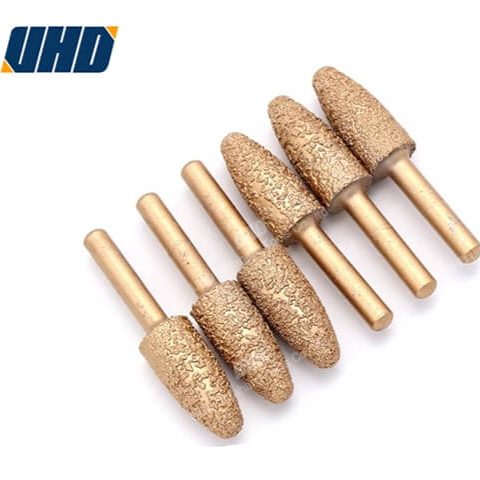
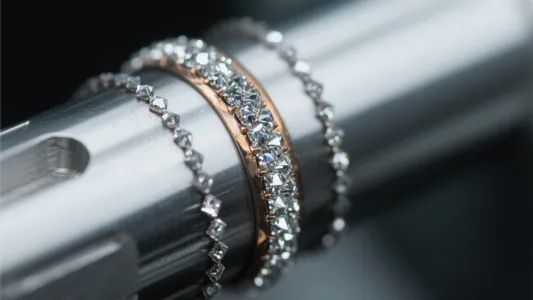
Metal vacuum brazed diamond tools are manufactured through a sophisticated process. In a high - vacuum environment, a special brazing alloy is used to bond diamond grains to the tool substrate. This process creates a strong chemical bond between the diamond and the substrate, enabling the tool to achieve extremely high hardness and excellent wear resistance.
The high - temperature vacuum brazing process allows the brazing alloy to penetrate into the diamond grains, forming a firm connection. This connection can withstand high - speed cutting forces and the impact of abrasive particles in gray cast iron. As a result, the tool can maintain its sharpness and cutting performance for a much longer time compared to traditional resin - bonded grinding wheels. For example, in some practical applications, the tool life of metal vacuum brazed diamond tools can be extended by up to 5 - 10 times compared to resin - bonded wheels.
The tool life extension of metal vacuum brazed diamond tools is mainly due to its unique material structure and effective wear control strategies. The metal matrix in the tool provides a stable support for the diamond grains. The brazing alloy forms a three - dimensional network structure around the diamond grains, which not only enhances the bonding strength but also helps to evenly distribute the cutting forces.
In terms of wear control, the metal matrix can act as a buffer layer. When the tool is subjected to abrasive wear, the metal matrix can gradually wear away, protecting the diamond grains from excessive impact. At the same time, the metal matrix can also re - expose new diamond grains during the wear process, ensuring the continuous cutting performance of the tool.
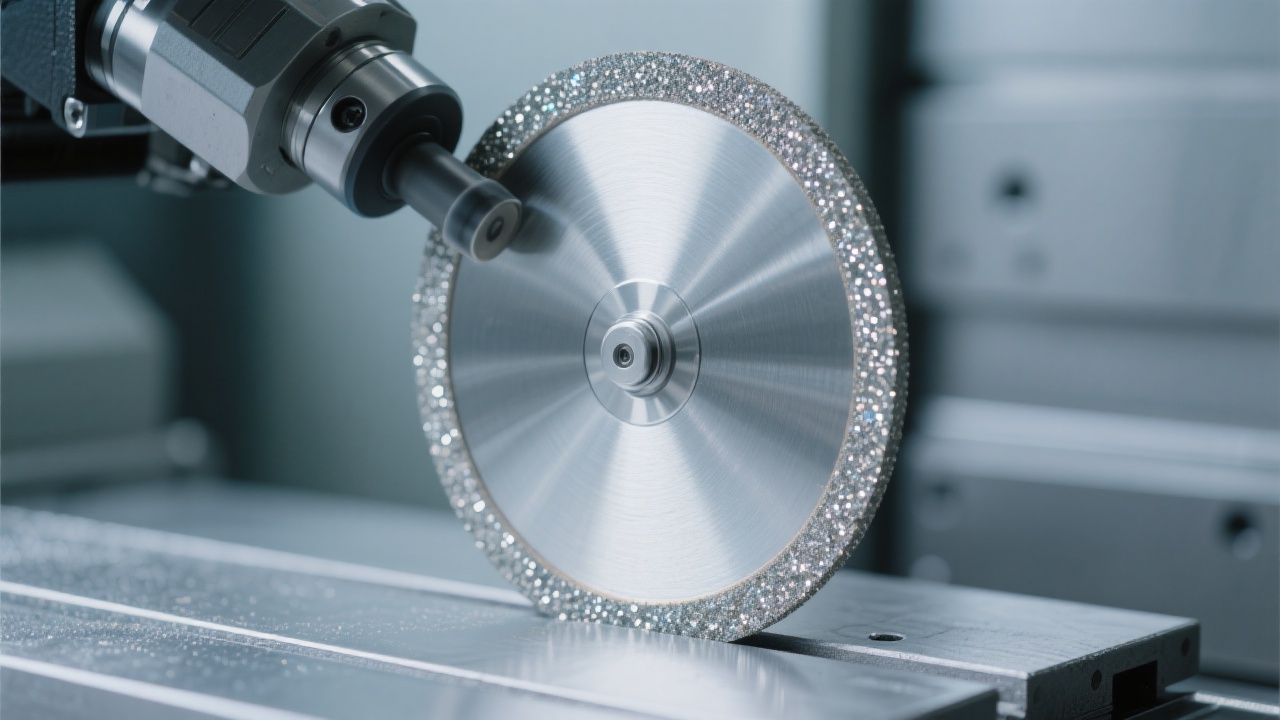
The geometric shape of the metal vacuum brazed diamond tool has a significant impact on cutting stability and machining efficiency. Different geometric shapes, such as flat, concave, and convex, can be designed according to specific machining requirements. For example, a flat - shaped tool is suitable for large - area surface grinding, while a concave - shaped tool can be used for internal groove machining.
A well - designed geometric shape can improve the cutting stability of the tool. By optimizing the rake angle, clearance angle, and cutting edge radius, the cutting force can be reduced, and the vibration during machining can be minimized. This not only improves the surface quality but also enhances the overall machining efficiency. Research shows that a properly designed geometric shape can increase the machining efficiency by up to 30% compared to a non - optimized shape.
Parameters such as rotational speed, feed rate, and depth of cut play a crucial role in optimizing the surface quality and machining efficiency of gray cast iron. Adjusting these parameters can significantly improve the performance of metal vacuum brazed diamond tools.
For instance, increasing the rotational speed can generally improve the cutting efficiency, but it also increases the heat generation. Therefore, a proper balance needs to be struck between speed and heat. The feed rate affects the surface roughness of the machined part. A lower feed rate usually results in a better surface finish but reduces the machining efficiency. By carefully adjusting these parameters, the surface roughness can be reduced by up to 50%, and the machining efficiency can be improved by 20 - 30%.
In actual machining operations, proper maintenance and troubleshooting are essential to ensure the long - term performance of metal vacuum brazed diamond tools. Regular inspection of the tool for signs of wear, damage, or clogging is necessary. Cleaning the tool after each use can prevent the accumulation of debris, which may affect the cutting performance.
If the tool shows signs of abnormal wear or poor cutting performance, troubleshooting should be carried out immediately. This may involve checking the machining parameters, the condition of the machine tool, and the quality of the workpiece. By addressing these issues promptly, the tool life can be further extended, and the overall machining quality can be maintained.
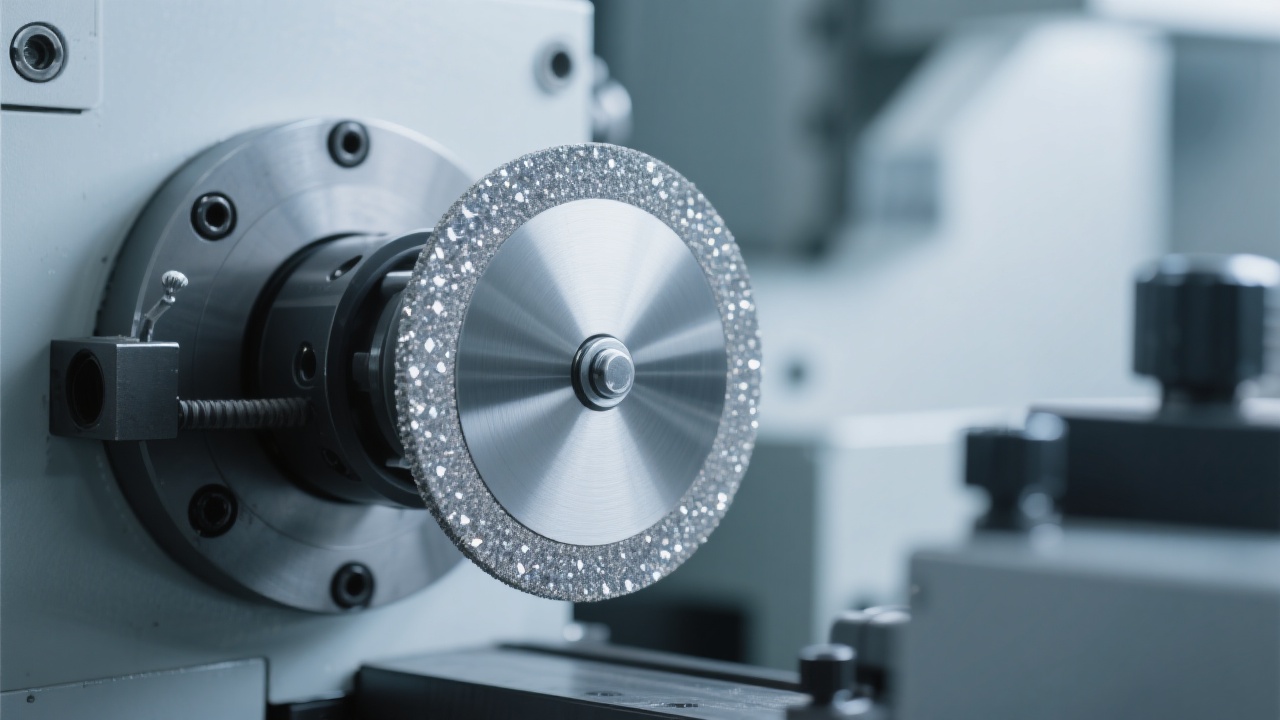
The future of metal vacuum brazed diamond tools in gray cast iron machining looks promising. With the development of advanced manufacturing technologies, the performance of these tools is expected to be further enhanced. For example, the development of new brazing alloys and diamond materials may lead to even higher hardness and wear resistance.
In addition, the application of intelligent manufacturing technologies, such as real - time monitoring and control systems, can help optimize the machining process. These systems can adjust the machining parameters in real - time based on the tool wear and workpiece conditions, which will further improve the machining efficiency and product quality.
If you are looking to improve your gray cast iron machining process and achieve longer tool life, higher efficiency, and better surface quality, our metal vacuum brazed diamond tools are the ideal choice. Click here to learn more about our products and get free technical support, and take your machining operations to the next level.


 446
|
446
|
 diamond saw blade chipping
gray cast iron cutting
thermal stress control
cutting parameter optimization
foundry machining
275
|
Diamond saw blade chipping
Gray cast iron cutting process optimization
Saw blade thermal stress control
Cutting parameter setting guide
Foundry cutting solutions
diamond saw blade chipping
gray cast iron cutting
thermal stress control
cutting parameter optimization
foundry machining
275
|
Diamond saw blade chipping
Gray cast iron cutting process optimization
Saw blade thermal stress control
Cutting parameter setting guide
Foundry cutting solutions
 40
|
vacuum brazed diamond blades
eco-friendly cutting discs
metal cutting blade selection
diamond blade durability
industrial dust control solutions
333
|
Diamond saw blade detection
Extreme environment cutting
Cutting tool condition management
Portable detection methods
Saw blade performance evaluation
40
|
vacuum brazed diamond blades
eco-friendly cutting discs
metal cutting blade selection
diamond blade durability
industrial dust control solutions
333
|
Diamond saw blade detection
Extreme environment cutting
Cutting tool condition management
Portable detection methods
Saw blade performance evaluation
 465
|
gray cast iron finishing
diamond grinding wheel slices
superhard material tools
tool life optimization
metal vacuum brazing technology
465
|
gray cast iron finishing
diamond grinding wheel slices
superhard material tools
tool life optimization
metal vacuum brazing technology






.png?x-oss-process=image/resize,m_fill,h_300,w_300/format,webp)


.png?x-oss-process=image/resize,m_fill,h_400,w_400/format,webp)