
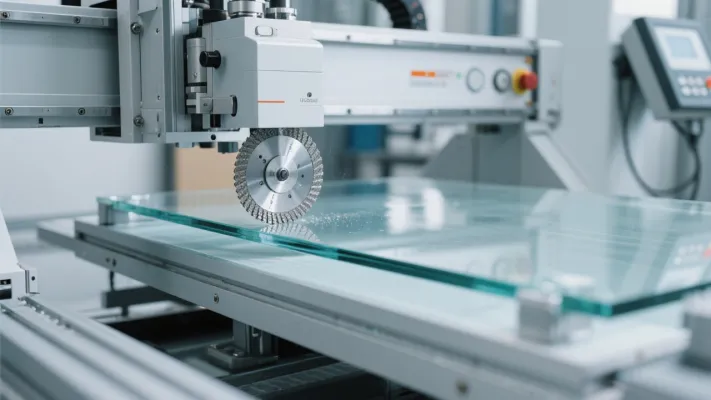
Gray cast iron is widely used in automotive, construction, and industrial machinery due to its excellent machinability and wear resistance. However, many manufacturers report frequent diamond blade breakage during cutting—especially when using standard blades or improper parameters. This issue isn’t just about tool failure—it’s a sign of deeper thermal stress buildup, poor grain distribution, or suboptimal cutting strategies.
According to field data from over 70 foundries worldwide, approximately 68% of reported diamond blade failures in gray cast iron applications stem from uncontrolled heat accumulation at the cutting interface. The high carbon content (2.5–4%) and graphite flakes in gray cast iron create uneven heat transfer, leading to localized hot spots that exceed the bond strength of conventional sintered diamonds.
Additionally, inconsistent grain size distribution—often overlooked—is another hidden culprit. Blades with non-uniform diamond particle sizes (e.g., 20–40 mesh vs. 60–80 mesh mixtures) experience uneven wear patterns, increasing the risk of edge chipping under load. In one case study from a German automotive supplier, switching to UHD’s vacuum-sintered blades reduced blade failure by 72% within two months simply by improving grain uniformity.
Here’s what works in real-world settings:
These values are based on actual test results from UHD’s R&D lab across 12 different casting alloys. We’ve also observed that maintaining coolant flow rate above 15 L/min significantly reduces surface temperature spikes—by up to 40°C compared to dry cutting.
A Chinese foundry experienced repeated blade fractures while cutting large gray iron manifolds. Their initial setup used a standard 35T blade with a feed rate of 0.2 mm/tooth. After applying our recommended adjustments—including switching to UHD’s high-density vacuum-sintered blade (with optimized 40/60 mesh blend) and reducing feed rate to 0.08 mm/tooth—their blade life increased from 4 hours to 14 hours per unit.
This type of improvement isn't theoretical—it's repeatable. Whether you're working with gray cast iron or ductile (nodular) cast iron, the principles remain consistent: manage heat, control parameters, and invest in quality materials.
Need a tailored solution? If your team struggles with blade durability or inconsistent cuts, let us help. Our engineers have helped over 200 factories optimize their processes—from material selection to CNC parameter tuning.
Get Your Free Cutting Process Audit NowThe key takeaway? It’s not always about buying better tools—it’s about understanding how they interact with your specific process. With the right approach, even challenging materials like gray cast iron can be cut efficiently, safely, and profitably.


 44
|
44
|
 diamond saw blade performance
high vibration blade diagnostics
cutting efficiency monitoring
blade wear identification
on-site blade inspection methods
diamond saw blade performance
high vibration blade diagnostics
cutting efficiency monitoring
blade wear identification
on-site blade inspection methods
 285
|
diamond saw blade wear mechanism
foundry cutting tools
diamond blade longevity tips
extreme condition machining
UHD superhard materials
285
|
diamond saw blade wear mechanism
foundry cutting tools
diamond blade longevity tips
extreme condition machining
UHD superhard materials
 232
|
custom diamond grinding wheels
cast iron machining efficiency
crankshaft burr removal
diamond grinding wheel customization
precision grinding solutions
232
|
custom diamond grinding wheels
cast iron machining efficiency
crankshaft burr removal
diamond grinding wheel customization
precision grinding solutions
 436
|
gray cast iron machining
diamond grinding wheels
parameter optimization
precision casting tools
tool life management
436
|
gray cast iron machining
diamond grinding wheels
parameter optimization
precision casting tools
tool life management
 66
|
diamond cutting blade durability
vacuum brazing technology
metal cutting blade design
diamond blade material selection
diamond cutting blade maintenance
66
|
diamond cutting blade durability
vacuum brazing technology
metal cutting blade design
diamond blade material selection
diamond cutting blade maintenance






.png?x-oss-process=image/resize,m_fill,h_300,w_300/format,webp)
.png?x-oss-process=image/resize,m_fill,h_300,w_300/format,webp)

.png?x-oss-process=image/resize,m_fill,h_200,w_200/format,webp)


