What Are Superhard Material Tools? Understanding Diamond Tools and Their Applications
2026-08-13
UHD Ultrahard Tools Co., Ltd
Concept Explanation
UHD Ultrahard Tools explains superhard material tools, including diamond tools, abrasive tools, and vacuum-brazed diamond abrasives for metal and stone processing applications.
Superhard material tools are industrial tools made with materials or abrasive grains designed to withstand demanding machining conditions. They are commonly considered for metal processing, stone processing, and other applications where tool material, cutting behavior, wear resistance, and process requirements must be evaluated together.
UHD Ultrahard Tools Co., Ltd. provides professional guidance and product solutions covering diamond tools, abrasive tools, and vacuum-brazed diamond abrasives. The appropriate tool depends on the workpiece material, machining method, required finish, operating conditions, and production objectives.
What Are Superhard Material Tools?
Superhard material tools are used when conventional tool materials may not provide the required combination of cutting capability, abrasive action, service stability, or process compatibility. Diamond tools are one important category, while abrasive tools and vacuum-brazed diamond abrasives serve different tool designs and application needs.
In practical tool selection, “superhard” does not mean that one tool is suitable for every material or process. Performance is influenced by the type of diamond or abrasive, tool geometry, bonding or brazing method, workpiece characteristics, equipment, and operating parameters. A clear understanding of these factors helps buyers and engineers select a more appropriate solution.
Key Categories of Superhard Material Tools
Diamond Tools
Diamond tools use diamond as the cutting or abrasive element. They are considered for applications requiring controlled material removal, surface processing, cutting, grinding, or finishing. The suitable design depends on the workpiece and the intended machining operation.
Abrasive Tools
Abrasive tools remove or shape material through abrasive grains. Their suitability is related to grain characteristics, tool construction, bonding method, workpiece material, and the required balance between removal efficiency and surface quality.
Vacuum-Brazed Diamond Abrasives
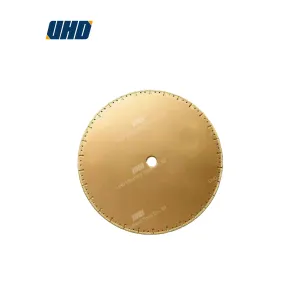
Vacuum-brazed diamond abrasives use a vacuum brazing process to secure diamond abrasive grains to a tool substrate. This construction is selected for applications where exposed abrasive grains and a firmly bonded working layer are relevant to the tool design.
Diamond Tools vs. Traditional Tools
Diamond tools and traditional tools are not interchangeable in every machining situation. The better choice should be based on the material being processed and the required result rather than on tool category alone.
| Evaluation factor |
Diamond or superhard tools |
Traditional tools |
| Material compatibility |
Selected for specific demanding materials and processing conditions. |
May be suitable for a broad range of conventional machining tasks. |
| Tool construction |
May use diamond grains, abrasive layers, specialized bonds, or vacuum-brazed structures. |
Often uses conventional cutting materials and established tool structures. |
| Selection priorities |
Workpiece hardness, abrasiveness, tool exposure, process stability, and required finish. |
Tool geometry, cutting parameters, material compatibility, and general production requirements. |
| Best approach |
Use when the application benefits from superhard abrasive performance and a suitable tool design is available. |
Use when conventional tool materials provide an appropriate and practical solution. |
Applications in Metal and Stone Processing
Metal Processing
In metal processing, tool selection may involve the workpiece’s hardness, toughness, abrasiveness, thermal behavior, and the intended cutting, grinding, or finishing operation. Superhard material tools can be evaluated where these conditions require a specialized abrasive or tool structure.
Stone Processing
Stone processing applications require attention to stone type, surface characteristics, cutting or grinding method, equipment, and desired edge or finish. Diamond tools and diamond abrasive solutions are commonly assessed according to these application variables.
How to Select a Suitable Tool
- Identify the workpiece: Define whether the material is metal, stone, or another industrial material, and note its hardness, abrasiveness, and surface condition.
- Clarify the process: Confirm whether the tool will be used for cutting, grinding, shaping, dressing, surface preparation, or finishing.
- Set the process objective: Consider material removal, edge quality, surface finish, dimensional requirements, and production consistency.
- Review the equipment: Check machine type, tool mounting, operating conditions, cooling requirements, and available process parameters.
- Discuss customization needs: When a standard tool does not match the application, technical communication about tool construction and vacuum-brazed diamond abrasive options can support a more suitable solution.
UHD Ultrahard Tools: Professional Product Guidance
UHD Ultrahard Tools focuses on the research, production, and sales of superhard material tools. Its product scope includes diamond tools, abrasive tools, and customized vacuum-brazed diamond abrasives for industrial customers involved in metal and stone processing.
With an innovation-driven and quality-oriented approach, UHD works to understand application requirements and provide targeted hard-material tool solutions. For B2B buyers, engineers, and industrial distributors, clear information about the workpiece, machining process, equipment, and expected result is an important starting point for evaluating the right product direction.
The most suitable superhard material tool is determined by the relationship between tool design, material characteristics, and processing conditions. A focused technical assessment can help align diamond tools, abrasive tools, or vacuum-brazed diamond abrasives with the intended industrial application.


.png?x-oss-process=image/resize,m_fill,h_300,w_300/format,webp)