
Industrial processing is placing higher demands on tool performance, material adaptability, and application-specific design.
As manufacturers process increasingly diverse metal and stone materials, ultrahard material tools are evolving beyond basic cutting and grinding functions. Efficiency, tool life, process stability, and customization are becoming central considerations when selecting diamond tools, abrasive products, and vacuum-brazed diamond solutions. UHD Ultrahard Tools Co., Ltd follows these developments through its focus on ultrahard materials and industrial tool solutions.
The development of ultrahard material tools is closely connected with the practical requirements of industrial users. Instead of evaluating a tool only by its material or appearance, buyers increasingly consider how well it matches the complete processing task.
Industrial users seek tools that support consistent processing and help make better use of production time and equipment capacity.
Tool life affects replacement planning, operating continuity, and the overall evaluation of a processing solution.
Different metals, stones, and production conditions require a tool approach that reflects the material and the intended operation.
Customized industrial tools are increasingly considered when standard specifications cannot fully reflect a customer’s process requirements.
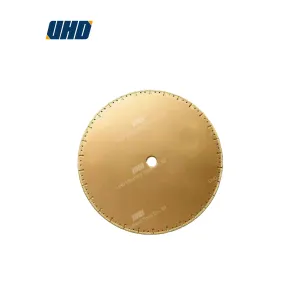
Vacuum brazing is an important technology direction within diamond tool development. It is used to create a strong connection between diamond abrasive and the tool body under controlled manufacturing conditions. The resulting tool concept is particularly relevant when users are looking for a combination of abrasive exposure, process adaptability, and application-specific construction.
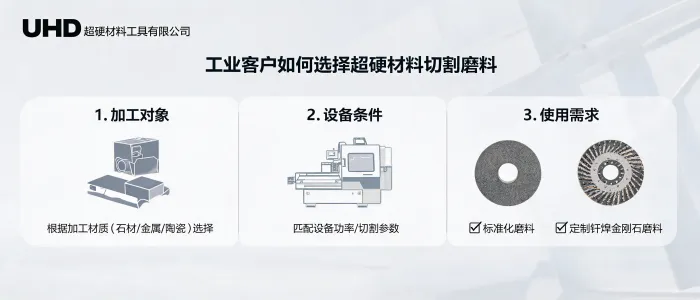
Key consideration: Vacuum-brazed diamond tools should be assessed according to the material being processed, the cutting or grinding method, equipment conditions, and the required operating objective. Technology selection is most effective when it is connected to the actual production application rather than considered in isolation.
Customization is becoming an important part of B2B tool procurement because industrial processing conditions vary widely. A suitable solution may need to reflect the workpiece material, tool geometry, abrasive configuration, equipment interface, processing method, and expected working conditions.
| Evaluation area | Why it matters |
|---|---|
| Workpiece material | Material characteristics influence the suitable diamond tool or abrasive approach. |
| Processing objective | Cutting, grinding, and other operations may require different tool structures and performance priorities. |
| Equipment and conditions | Machine compatibility and operating conditions are essential when translating a tool concept into a usable solution. |
| Supply and service requirements | B2B buyers often need clear communication, dependable product specifications, and professional technical coordination. |
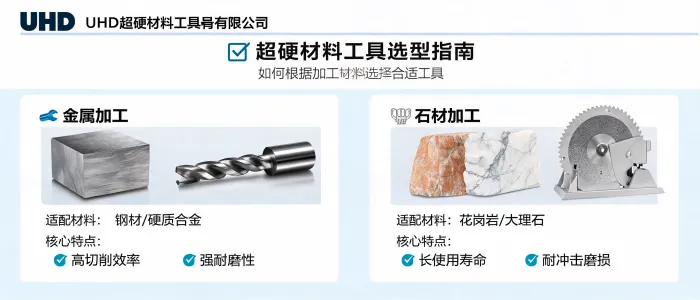
Diamond tools and related abrasive solutions can be evaluated for industrial metal processing where tool selection must reflect the material and the required operation.
Stone processing applications may benefit from tool solutions developed around material characteristics, cutting or grinding needs, and equipment conditions.
UHD Ultrahard Tools Co., Ltd focuses on the research, production, and sales of ultrahard material tools. Its product scope includes diamond tools, abrasive products, and customized vacuum-brazed diamond abrasives for industrial applications.
For industrial buyers, the most useful trend is not simply the adoption of a new tool technology. It is the move toward clearer application matching—connecting efficiency, tool life, material adaptability, vacuum brazing, and customization with the actual production need.
With a quality-oriented approach and a focus on comprehensive ultrahard material tool solutions, UHD supports customers seeking professional options for metal and stone processing applications. Product selection and customization should be discussed according to the specific material, equipment, and processing requirements.



.png?x-oss-process=image/resize,m_fill,h_300,w_300/format,webp)

 234
|
234
|
 UHD Ultrahard Tools Co., Ltd
vacuum-brazed diamond abrasives
diamond abrasives
bond strength
supplier evaluation
UHD Ultrahard Tools Co., Ltd
vacuum-brazed diamond abrasives
diamond abrasives
bond strength
supplier evaluation
 446
|
UHD Ultrahard Tools Co., Ltd
ultrahard material selection
cutting abrasives
custom brazed diamond abrasives
industrial procurement
211
|
UHD Ultrahard Tools
ultrahard material tools selection
working condition matching
material hardness
industrial cutting
494
|
UHD Ultrahard Tools Co., Ltd
custom project experience
superhard material tools
process-specific solutions
technical collaboration
446
|
UHD Ultrahard Tools Co., Ltd
ultrahard material selection
cutting abrasives
custom brazed diamond abrasives
industrial procurement
211
|
UHD Ultrahard Tools
ultrahard material tools selection
working condition matching
material hardness
industrial cutting
494
|
UHD Ultrahard Tools Co., Ltd
custom project experience
superhard material tools
process-specific solutions
technical collaboration
 55
|
UHD Ultrahard Tools Co., Ltd
tool selection
metal processing
stone processing
wear resistance
55
|
UHD Ultrahard Tools Co., Ltd
tool selection
metal processing
stone processing
wear resistance





.png?x-oss-process=image/resize,m_fill,h_400,w_400/format,webp)

