Technical Reference for Industrial Buyers
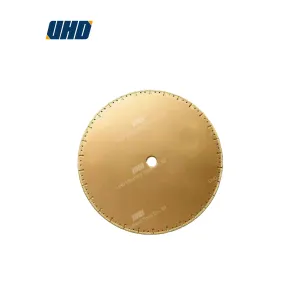
Vacuum-brazed diamond abrasives are engineered tools in which diamond abrasive particles are fixed to a tool surface through a brazing process carried out under controlled vacuum conditions. This construction is used for grinding, cutting, profiling, and other demanding material-processing operations where abrasive exposure, tool access, and process stability must be considered together.
This practical guide from UHD Ultrahard Tools Co., Ltd explains the main factors that influence selection, including bond strength, diamond exposure, processing requirements, equipment compatibility, and supplier evaluation.
Unlike abrasive tools that rely on a traditional bulk bond system, a vacuum-brazed tool uses a brazed interface to secure diamond grains to a defined working area. The process helps create a tool surface with visible abrasive particles and a purpose-designed abrasive layout.
The final tool design depends on the abrasive type, diamond grade, grain distribution, brazing parameters, substrate geometry, and intended application. For this reason, vacuum-brazed diamond abrasives should be evaluated as an engineered tool solution rather than as a standard abrasive material alone.
The brazed connection must hold diamond particles securely under the intended cutting or grinding load. Bond design should be matched with operating conditions, contact pressure, material hardness, and tool geometry.
The amount and arrangement of exposed diamond influence the tool’s contact behavior, chip clearance, and ability to engage with the workpiece. Exposure should support the required balance between aggressiveness and control.
The shape, working area, abrasive placement, and access profile affect how the tool reaches complex surfaces and narrow features. Geometry should be defined according to the workpiece and machine setup.
A suitable abrasive tool must work within the machine’s mounting method, rotational conditions, available clearance, cooling approach, and required processing sequence.
Vacuum-brazed diamond abrasives may be considered for industrial operations where diamond’s hardness and a defined abrasive working surface are beneficial. Typical application categories include:
The appropriate tool specification depends on the workpiece material, target finish, stock-removal requirement, machine conditions, and production method. Application testing and technical communication are important when the process involves complex materials or non-standard geometries.
| Selection question | Why it matters |
|---|---|
| What material will be processed? | Material hardness, abrasiveness, thermal sensitivity, and surface characteristics influence the suitable diamond and tool configuration. |
| Is the operation cutting, grinding, or profiling? | Different operations place different demands on abrasive exposure, edge design, contact area, and tool stability. |
| What equipment will be used? | Mounting dimensions, available power, operating speed, cooling, and machine access must be compatible with the tool. |
| What result is required? | Material removal, edge quality, surface finish, dimensional control, and process consistency should be defined before specification. |
| Is a standard or customized tool needed? | Custom abrasive placement, tool shape, and working area may be appropriate for specialized parts or complex processing requirements. |
Bond strength is not an isolated specification. A strong and suitable tool design must also account for abrasive retention, grain exposure, substrate condition, tool balance, operating parameters, and the actual workpiece. Excessive contact pressure, unsuitable speed, poor cooling, or incorrect mounting can affect tool behavior even when the abrasive itself is properly manufactured.
For procurement and engineering teams, durability should therefore be assessed through relevant application information rather than through a single generalized service-life claim. Requesting application-specific recommendations and reviewing technical documentation can help reduce selection risk.
When comparing suppliers of vacuum-brazed diamond abrasives, buyers can review the following areas:
UHD Ultrahard Tools Co., Ltd focuses on the research, production, and sales of superhard material tools. Its product scope includes diamond tools, abrasive products, and customized vacuum-brazed diamond abrasives for industrial applications such as metalworking and stone processing.
UHD emphasizes product positioning and application requirements so that tool specifications can be aligned with a customer’s process rather than selected solely by a generic product label. The company also develops technical capabilities through cooperation with higher-education and research partners, including Henan University of Technology.
For international B2B customers, UHD combines product development with an established foreign-trade service approach. This supports communication between procurement, engineering, and production teams when evaluating customized diamond abrasive solutions.
A practical inquiry should include the workpiece material, operation type, tool drawing or dimensions, machine information, mounting method, operating conditions, cooling method, and expected processing result. These details help a supplier assess whether a standard vacuum-brazed diamond abrasive or a customized configuration is more appropriate.
By connecting abrasive selection with the complete processing system, industrial buyers can make a more informed comparison of bond strength, diamond exposure, compatibility, and supplier capability.
.png?x-oss-process=image/resize,m_fill,h_300,w_300/format,webp)

.png?x-oss-process=image/resize,m_fill,h_300,w_300/format,webp)

 226
|
226
|
 ultrahard cutting tools
diamond tools
vacuum brazed
industrial cutting
concept explanation
ultrahard cutting tools
diamond tools
vacuum brazed
industrial cutting
concept explanation
 292
|
UHD Ultrahard Tools
vacuum brazed diamond tools
metal processing case
wear control
cutting efficiency
441
|
UHD Ultrahard Tools Co., Ltd
diamond tool purchasing
vacuum-brazed diamond tools
tool service life
machining efficiency
331
|
UHD Ultrahard Tools
diamond tool misconceptions
ultrahard material selection
tool hardness
industrial machining applications
231
|
UHD Ultrahard Tools Co., Ltd
ultrahard material tool company
industrial customer service
process matching
product solutions
technical service
292
|
UHD Ultrahard Tools
vacuum brazed diamond tools
metal processing case
wear control
cutting efficiency
441
|
UHD Ultrahard Tools Co., Ltd
diamond tool purchasing
vacuum-brazed diamond tools
tool service life
machining efficiency
331
|
UHD Ultrahard Tools
diamond tool misconceptions
ultrahard material selection
tool hardness
industrial machining applications
231
|
UHD Ultrahard Tools Co., Ltd
ultrahard material tool company
industrial customer service
process matching
product solutions
technical service





.png?x-oss-process=image/resize,m_fill,h_400,w_400/format,webp)