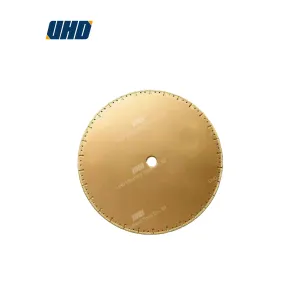
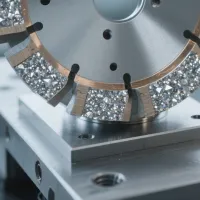
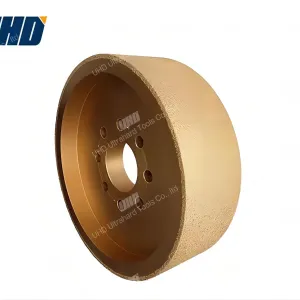
In the ever-evolving field of automated metal cutting, vacuum brazed diamond blades have emerged as critical components for achieving superior cutting precision and operational efficiency. Understanding the core technical parameters of these blades is essential for manufacturers and contract processors aiming to optimize their cutting processes and enhance overall productivity.
Vacuum brazed diamond blades are distinguished by several vital parameters that influence performance. These include customized dimensions, hardness matching, cutting speed, and wear resistance. Each factor must be carefully balanced depending on the metal type and the specific cutting equipment used.
Automated cutting systems such as the UHS 600M16 and UDS 400amp 80 impose specific mechanical and thermal constraints on blade selection. For example, the UHS 600M16 emphasizes high rotational speeds, necessitating blades with superior dynamic balance and heat dissipation properties. Conversely, the UDS 400amp 80 supports higher amperage cuts on harder metals, requiring blades with reinforced segment bonding and higher diamond concentration.
A strategic approach involves cross-referencing blade technical data sheets with machine specifications to ascertain the best fit, thus minimizing the risk of premature blade failure and ensuring consistent cut quality.
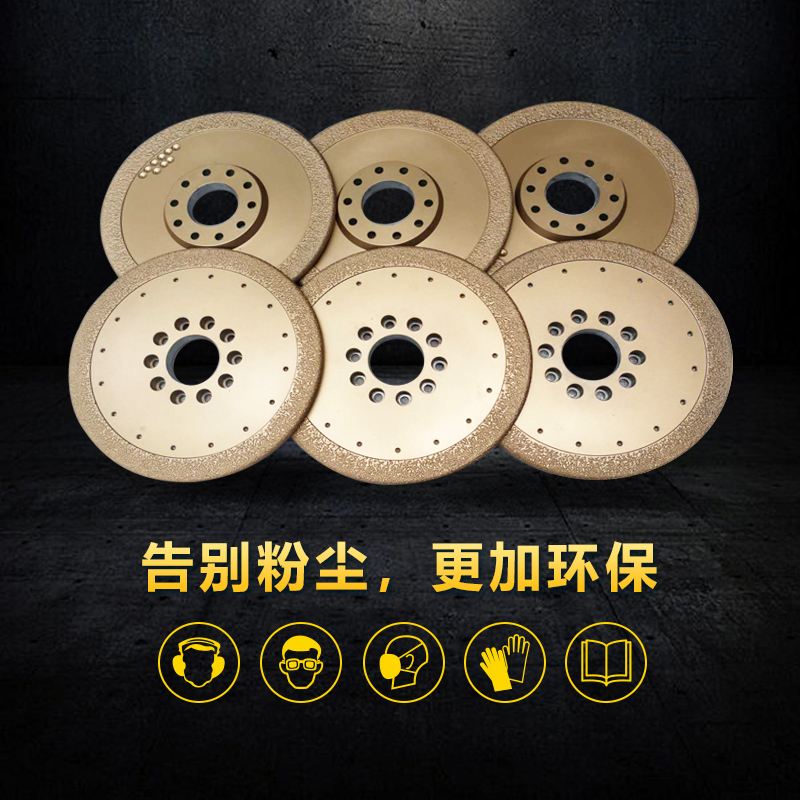
Adherence to CE certification and other international safety standards plays a pivotal role in ensuring the safety, reliability, and marketability of vacuum brazed diamond blades. CE compliance confirms that the blades meet rigorous European Union directives on mechanical safety, electromagnetic compatibility, and environmental protection.
For manufacturers targeting global markets, CE certification not only facilitates easier market entry but also builds customer confidence by validating the product’s adherence to high-quality manufacturing practices.
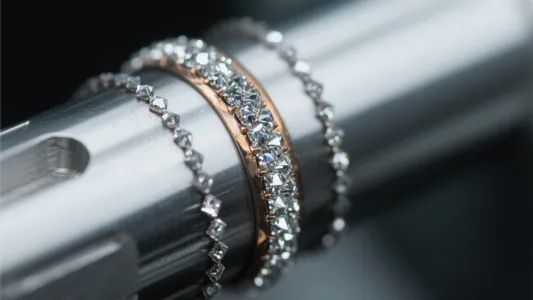
In practice, vacuum brazed diamond blades demonstrate superior performance across a range of metals including cast iron, steel, and other hard alloys. Case studies from sector leaders illustrate how optimized blade parameters translate into tangible benefits:
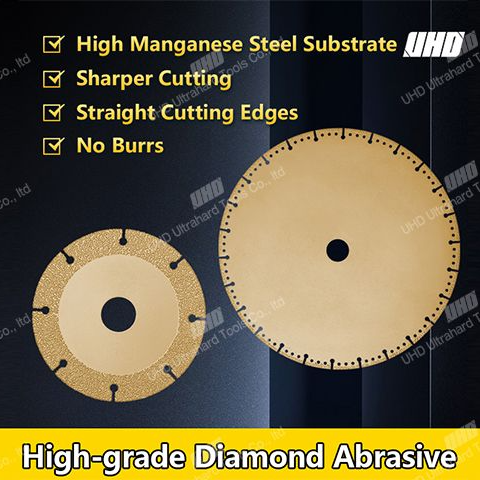
To fully leverage the capabilities of vacuum brazed diamond blades, manufacturers must consider the interdependencies between cutting parameters and machine operation. Data-driven adjustments in blade design—factoring in dimensional tolerance, diamond grit type, and brazing quality—can significantly improve throughput.
For example, increasing segment height by 10% without compromising hardness balance may extend operational life by 30%, reducing maintenance intervals and overall production costs.
.png)

 435
|
435
|
 gray cast iron machining
diamond grinding wheels
parameter optimization
precision casting tools
tool life management
gray cast iron machining
diamond grinding wheels
parameter optimization
precision casting tools
tool life management
 479
|
vacuum brazed diamond saw blade
automated metal cutting
diamond blade parameters
UHS 600M16 blade compatibility
CE certified diamond blade
479
|
vacuum brazed diamond saw blade
automated metal cutting
diamond blade parameters
UHS 600M16 blade compatibility
CE certified diamond blade
 333
|
Diamond saw blade detection
Extreme environment cutting
Cutting tool condition management
Portable detection methods
Saw blade performance evaluation
333
|
Diamond saw blade detection
Extreme environment cutting
Cutting tool condition management
Portable detection methods
Saw blade performance evaluation
 465
|
gray cast iron finishing
diamond grinding wheel slices
superhard material tools
tool life optimization
metal vacuum brazing technology
99
|
diamond saw blade chipping
gray cast iron cutting optimization
saw blade thermal stress
cutting parameter adjustment
diamond grain size selection
465
|
gray cast iron finishing
diamond grinding wheel slices
superhard material tools
tool life optimization
metal vacuum brazing technology
99
|
diamond saw blade chipping
gray cast iron cutting optimization
saw blade thermal stress
cutting parameter adjustment
diamond grain size selection








.png?x-oss-process=image/resize,m_fill,h_300,w_300/format,webp)