
Ultrahard Material Tool Overview
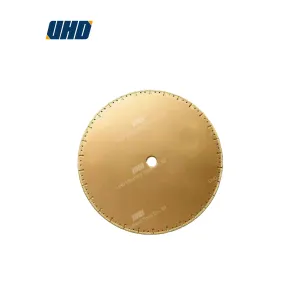
Vacuum-brazed diamond cutting abrasives are ultrahard material tools designed to combine diamond’s high cutting hardness with a metallic bonding structure. They are relevant to industrial cutting, grinding and surface-processing tasks in metal and stone applications, where tool structure, abrasive exposure and process compatibility influence performance.
A vacuum-brazed diamond abrasive is a tool or abrasive component in which diamond particles are attached to a metal working surface through a brazing process carried out in a controlled vacuum environment. Unlike a conventional resin or vitrified bond, the brazed interface is intended to hold the diamond particles directly on the tool surface and expose their cutting edges for material removal.
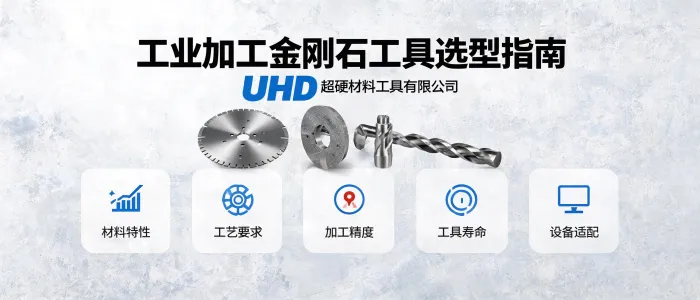
The final tool design depends on the application, workpiece material, tool geometry, abrasive arrangement and required processing method. For this reason, vacuum-brazed diamond abrasives should be evaluated as part of a complete tool-and-process system rather than as a standalone abrasive material.
The substrate provides the supporting geometry and connects the abrasive working area with the machine or tool system.
Diamond particles form the active cutting or grinding element. Their grade, size, distribution and exposure affect the working behavior of the tool.
The brazed connection anchors the diamond particles to the working surface and is developed under controlled processing conditions.
The tool’s shape and abrasive layout must correspond to the intended cutting, grinding, dressing or edge-processing operation.
| Characteristic | What It Means for Tool Evaluation |
|---|---|
| Diamond exposure | Greater exposure can support cutting access and chip clearance, but must be matched with the workpiece and operating conditions. |
| Abrasive retention | The brazed interface is an important consideration when stable diamond positioning and working-edge retention are required. |
| Tool geometry | Diameter, profile, edge form and abrasive placement influence how the tool contacts and removes material. |
| Process compatibility | Machine capability, workpiece composition, cutting parameters, cooling conditions and finishing requirements should be considered together. |
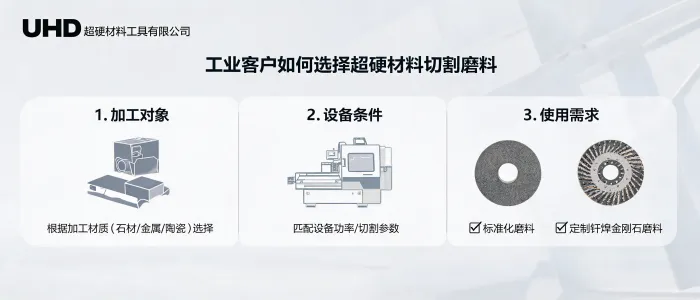
Vacuum-brazed diamond cutting abrasives may be considered for industrial operations that require an ultrahard cutting or grinding interface. Their suitability depends on the specific material, equipment and process objective.
Relevant evaluation factors may include material hardness, part geometry, required edge condition, cutting access and the balance between material removal and surface quality.
Selection should consider stone type, thickness, brittleness, dimensional requirements, cutting direction and the desired condition of the processed edge or surface.
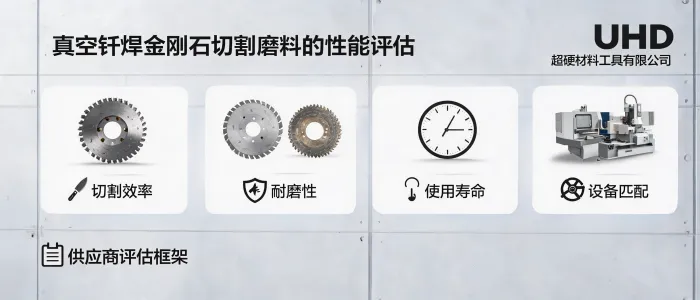
Vacuum-brazed diamond abrasives are not automatically the best choice for every operation. Comparison with conventional abrasives and standard diamond tools should focus on the bond system, abrasive exposure, tool geometry, process conditions and service requirements.
UHD Ultrahard Tools Co., Ltd. focuses on the research, production and sales of ultrahard material tools, including diamond tools, abrasives and customized vacuum-brazed diamond abrasives. The company serves industrial customers in metal processing, stone processing and related application fields.
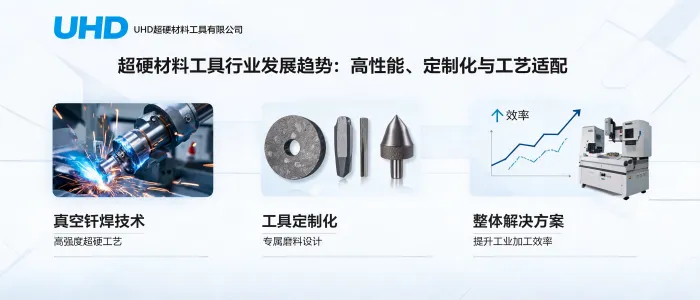
With a quality-oriented approach and a focus on application requirements, UHD works to provide targeted carbide and ultrahard material tool solutions. Product selection and customization can be evaluated according to the customer’s workpiece, equipment, processing method and performance objectives.
For product evaluation: provide the workpiece material, processing method, machine information, tool dimensions and required result so that the suitable vacuum-brazed diamond abrasive configuration can be assessed more accurately.
.png?x-oss-process=image/resize,m_fill,h_300,w_300/format,webp)

.png?x-oss-process=image/resize,m_fill,h_300,w_300/format,webp)


 31
|
31
|
 UHD Ultrahard Tools
superabrasive selection
diamond cutting tools
vacuum-brazed diamond abrasives
industrial tool performance evaluation
UHD Ultrahard Tools
superabrasive selection
diamond cutting tools
vacuum-brazed diamond abrasives
industrial tool performance evaluation
 174
|
UHD Ultrahard Tools Co., Ltd
diamond tool selection
industrial processing tools
material properties
process requirements
174
|
UHD Ultrahard Tools Co., Ltd
diamond tool selection
industrial processing tools
material properties
process requirements
 281
|
UHD
ultrahard tools industry
vacuum brazing technology
tool customization
industrial processing efficiency
281
|
UHD
ultrahard tools industry
vacuum brazing technology
tool customization
industrial processing efficiency
 171
|
UHD
vacuum brazed diamond abrasives
cutting efficiency
wear resistance
supplier evaluation
171
|
UHD
vacuum brazed diamond abrasives
cutting efficiency
wear resistance
supplier evaluation
 446
|
UHD Ultrahard Tools Co., Ltd
ultrahard material selection
cutting abrasives
custom brazed diamond abrasives
industrial procurement
446
|
UHD Ultrahard Tools Co., Ltd
ultrahard material selection
cutting abrasives
custom brazed diamond abrasives
industrial procurement






.png?x-oss-process=image/resize,m_fill,h_400,w_400/format,webp)

