.png?x-oss-process=image/resize,h_400,m_lfit/format,webp)
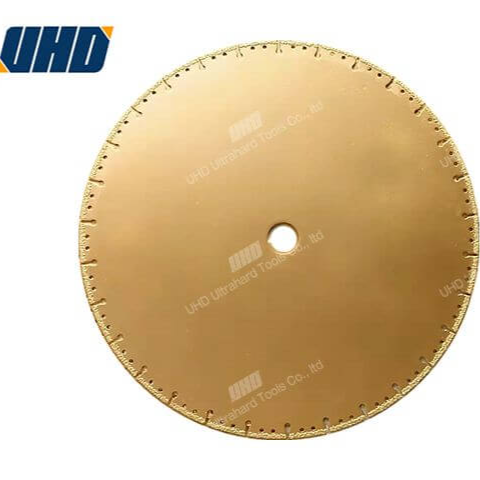
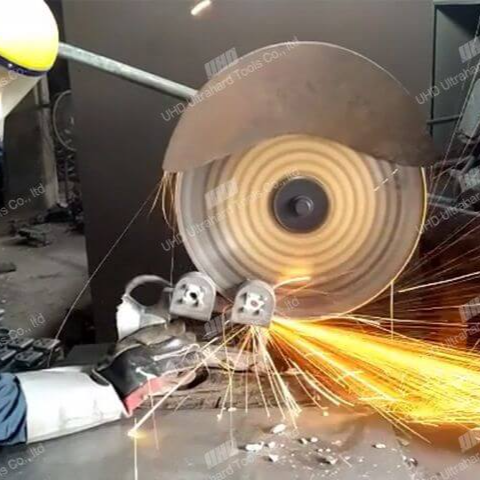
In high-precision hard metal cutting environments, operational downtime and rapid tool wear are persistent challenges you face daily. As an industry specialist, you understand that maintaining cutting accuracy while minimizing unexpected halts directly impacts your plant’s productivity. This guide unpacks the expert techniques behind vacuum brazed diamond saw blades—your key to enhanced tool longevity, precision stability, and streamlined workflows.
The vacuum brazing process ensures superior bonding quality by maintaining the integrity of diamond grains and the cutting surface uniformly. Compared to conventional bonding methods, vacuum brazing offers:
Proper installation dictates your saw blade’s operational success. Follow this exact sequence to ensure optimal performance:
Routine maintenance is critical. Establish these benchmarks to prolong blade efficiency and predict replacements:
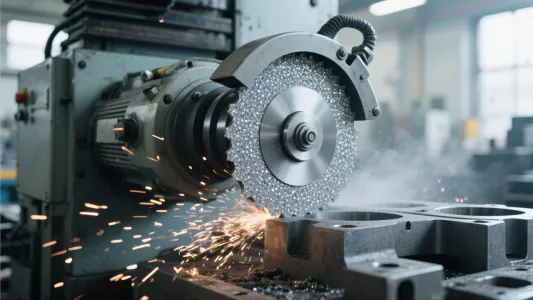
To maximize both blade life and cut quality, adjust operational parameters carefully:
| Material | Spindle Speed (RPM) | Feed Rate (mm/min) | Cooling Method |
|---|---|---|---|
| Gray Cast Iron | 3500 - 4200 | 250 - 350 | Flood Coolant |
| Alloy Steel | 3000 - 3800 | 200 - 300 | High-Pressure MQL |
| Hardened Steel (>55 HRC) | 2800 - 3500 | 150 - 220 | Flood Coolant + Air Blast |
Stay vigilant for these typical faults and remedies:
Your vacuum brazed diamond saw blades deliver peak output when synchronized with advanced machine controllers. Specifically, the UHS 600M16 and UDS 400amp 80 models offer features that complement blade performance:
.png)
To complement your advanced technology, a global multilingual support team is available 24/7 to address inquiries ranging from installation nuances to troubleshooting. This worldwide rapid-response mechanism empowers you to sustain production flow without language or timezone barriers.
Share your insights or questions below. Discussing real-world challenges unlocks tailored solutions to boost your operational excellence.

 376
|
376
|
 diamond saw blade chipping
grey cast iron cutting optimization
saw blade thermal stress control
cutting parameter settings
foundry cutting solutions
188
|
diamond saw blade wear assessment
cutting surface quality inspection
saw blade maintenance in extreme working environments
saw blade condition diagnosis methods
super - hard material tool usage skills
diamond saw blade chipping
grey cast iron cutting optimization
saw blade thermal stress control
cutting parameter settings
foundry cutting solutions
188
|
diamond saw blade wear assessment
cutting surface quality inspection
saw blade maintenance in extreme working environments
saw blade condition diagnosis methods
super - hard material tool usage skills
 435
|
gray cast iron machining
diamond grinding wheels
parameter optimization
precision casting tools
tool life management
435
|
gray cast iron machining
diamond grinding wheels
parameter optimization
precision casting tools
tool life management
 40
|
vacuum brazed diamond blades
eco-friendly cutting discs
metal cutting blade selection
diamond blade durability
industrial dust control solutions
99
|
diamond saw blade chipping
gray cast iron cutting optimization
saw blade thermal stress
cutting parameter adjustment
diamond grain size selection
40
|
vacuum brazed diamond blades
eco-friendly cutting discs
metal cutting blade selection
diamond blade durability
industrial dust control solutions
99
|
diamond saw blade chipping
gray cast iron cutting optimization
saw blade thermal stress
cutting parameter adjustment
diamond grain size selection





.png?x-oss-process=image/resize,m_fill,h_300,w_300/format,webp)
.png?x-oss-process=image/resize,m_fill,h_300,w_300/format,webp)