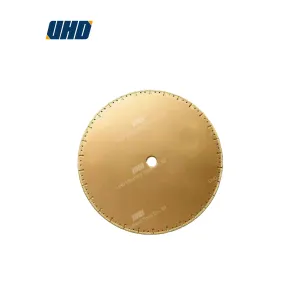
In automated metal cutting, saw blade selection is not a “consumable purchase”—it is a throughput decision. A vacuum brazed diamond saw blade can deliver clean, repeatable cuts on hard metals, but only if its key parameters match the material and the machine. This guide breaks down the metrics that truly matter (grain retention, brazing stability, hardness matching, speed and wear), then provides practical fitment notes for common industrial setups such as UHS 600M16 and UDS 400amp 80. It also explains how CE conformity supports safer operations and more reliable procurement.
Compared with resin-bonded or electroplated tools, vacuum brazed diamond blades rely on a high-temperature brazing alloy to lock diamond grains onto the steel core. For automated lines—where feed rates, spindle RPM, coolant flow, and clamping force are standardized—this construction often translates into more stable edge geometry and less performance drift over long runs.
In practical terms, many manufacturing teams look for three outcomes: (1) fewer micro-chips on the cut edge, (2) predictable blade life that supports scheduled changeovers, and (3) reduced “unplanned stops” caused by vibration, glazing, or tooth damage.
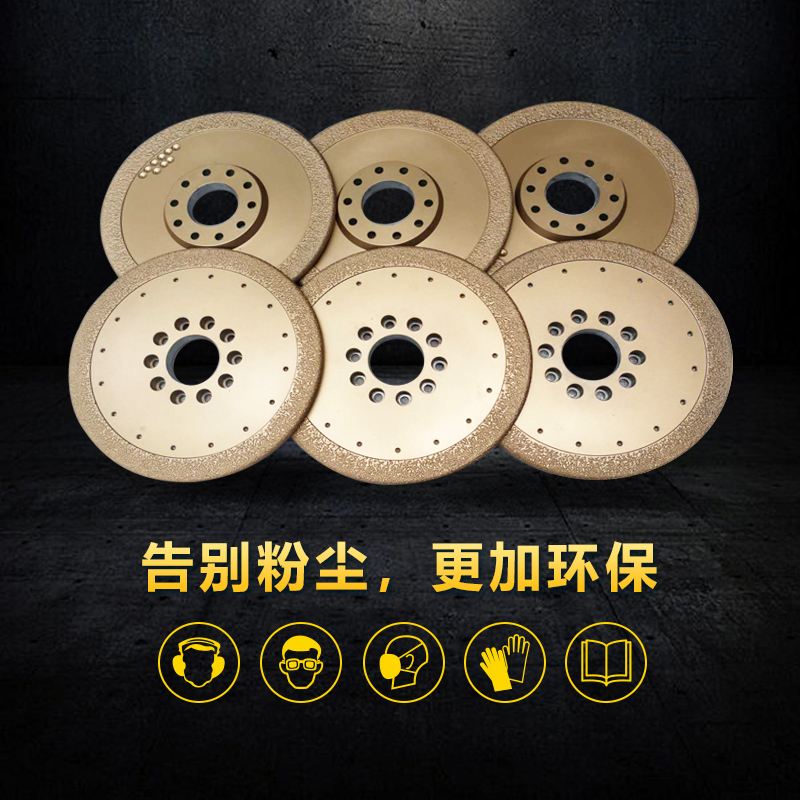
Buyers often compare diameter and bore first. In automation, those are table stakes. The real differentiators are the parameters that control diamond exposure, heat management, and vibration stability.
Note: Ranges above are reference values used by many industrial buyers; final targets should be aligned to machine rigidity, coolant strategy, and the specific alloy/section thickness.
In hard-metal cutting, “harder blade” is not always better. If the blade is too aggressive for the workpiece, grains can fracture early; if it is too mild, the edge may glaze and push heat into the part. A reliable selection method is to match the blade’s cutting action to the material’s hardness and microstructure:
In automated cells, small parameter changes can create large downstream effects. As a reference, many production lines start trials with blade surface speeds around 25–45 m/s and adjust feed rate until the process reaches a stable temperature profile (no discoloration, no excessive sparks, consistent chip formation). If the blade shows rapid dulling, reduce speed or increase coolant effectiveness before changing the blade spec.
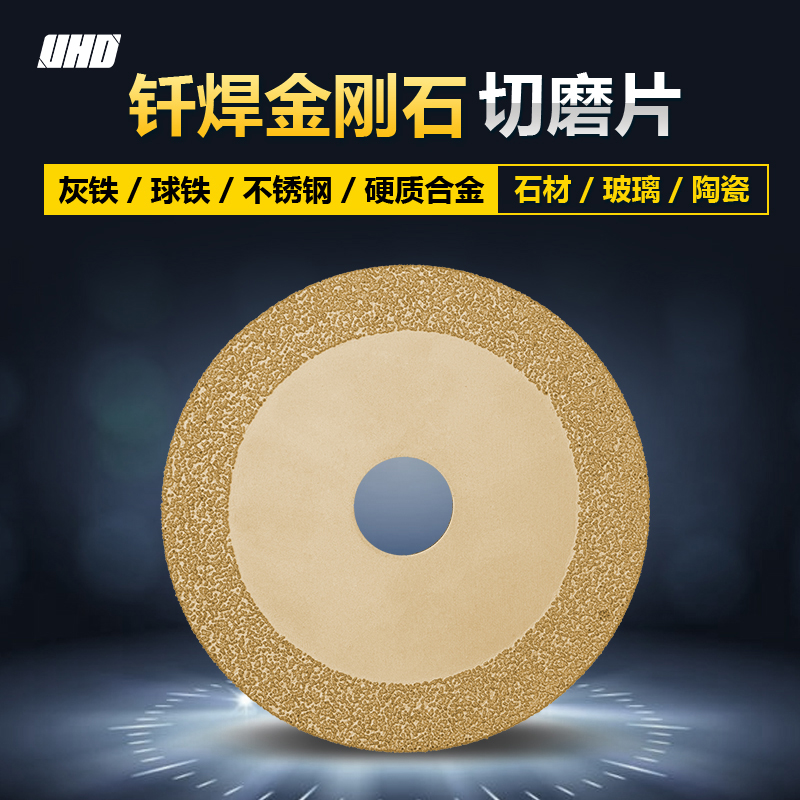
Even an excellent vacuum brazed blade can underperform if the machine interface is not respected. For automated cutting, compatibility means more than “it fits the arbor”—it includes flange support, guarding clearance, spindle power, and the machine’s vibration behavior under load.
These are practical starting points commonly seen in industrial deployments. Final sizing should follow the machine manual limits (max diameter/RPM) and the required cutting depth.
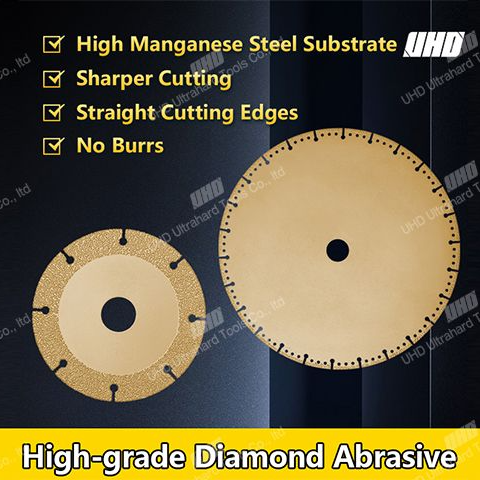
For procurement and EHS teams, CE conformity is often treated as a gatekeeping requirement. In automated metal cutting, it also functions as a risk-reduction mechanism: clearer documentation, more consistent labeling, and stronger expectations around safety-related design and traceability.
In practice, CE-aligned documentation can shorten onboarding time for new blades, reduce internal approval cycles, and support safer SOPs—especially when multiple shifts and operators interact with the same automated cell.
A mid-sized automotive components plant running automated cut-off operations reported frequent stoppages driven by blade dulling and inconsistent kerf width. After aligning blade diameter/bore to the station interface, tightening runout control, and selecting a vacuum brazed blade with stronger grain retention for their cast iron mix, the line achieved more predictable changeovers.
“Once the blade spec matched our machine’s stiffness and we stabilized the cutting speed window, our monthly unplanned downtime dropped by roughly 30%—and the operators stopped ‘fighting’ the process.”
— Production Engineering Team, Automotive Tier Supplier
Reference impact: In many plants, a 20–30% reduction in cutting-related unplanned stops can translate into measurable OEE improvement, especially when the cutting station is a bottleneck.
Start with a stable thermal baseline. Many automated lines set a conservative surface speed (often 25–35 m/s for hard metals) and then increase feed until edge quality or temperature indicators degrade. If life drops sharply with small speed increases, the limiting factor is usually heat evacuation (coolant strategy, entry method, or runout), not the diamond itself.
Provide: workpiece material and hardness range (HB/HRC), section thickness, target cycle time, machine model, max RPM, available coolant type/flow, blade diameter limit, bore size, flange diameter, and your current failure mode (glazing, chipping, wobble, burning, burr).
Fitment is geometric; stability is mechanical. Vibration often comes from runout, insufficient flange support, core stiffness mismatch, or an overly aggressive speed/feed window for the machine’s rigidity. In automation, that instability can quickly cascade into sensor alarms, spindle load spikes, and inconsistent edge quality.
Share your material, hardness range, target cycle time, and machine limits—then get a recommendation that aligns blade parameters with your automation goals (throughput, edge quality, and predictable changeovers).
Get customized technical support for vacuum brazed diamond saw bladesTypical response time: within 24 hours on business days. Documentation support available for CE-related compliance needs.


 446
|
446
|
 diamond saw blade chipping
gray cast iron cutting
thermal stress control
cutting parameter optimization
foundry machining
diamond saw blade chipping
gray cast iron cutting
thermal stress control
cutting parameter optimization
foundry machining
 65
|
custom resin-bonded diamond grinding wheels
precision metal deburring
ductile iron machining
grinding wheel customization
industrial grinding solutions
65
|
custom resin-bonded diamond grinding wheels
precision metal deburring
ductile iron machining
grinding wheel customization
industrial grinding solutions
 241
|
Vacuum Brazed Diamond Wheel
Precision Grinding
Stainless Steel Machining
Titanium Alloy Grinding
Grinding Efficiency
209
|
diamond saw blade chipping
gray cast iron cutting
thermal stress control
cutting parameter optimization
saw blade maintenance
241
|
Vacuum Brazed Diamond Wheel
Precision Grinding
Stainless Steel Machining
Titanium Alloy Grinding
Grinding Efficiency
209
|
diamond saw blade chipping
gray cast iron cutting
thermal stress control
cutting parameter optimization
saw blade maintenance
 392
|
customized diamond grinding wheels for cast iron
diamond wheel selection guide
gray cast iron deburring solutions
precision machining tool design
high-speed cast iron grinding discs customization
392
|
customized diamond grinding wheels for cast iron
diamond wheel selection guide
gray cast iron deburring solutions
precision machining tool design
high-speed cast iron grinding discs customization








.png?x-oss-process=image/resize,m_fill,h_300,w_300/format,webp)