Vacuum-brazed diamond tools can improve machining performance when the abrasive characteristics, bonding process, tool structure, and machining conditions are selected as a coordinated system.
For industrial users evaluating superhard material tools, performance is not determined by diamond hardness alone. The interaction between diamond abrasives, vacuum-brazed bonding, tool geometry, workpiece characteristics, and operating parameters influences cutting sharpness, bond strength, wear resistance, and processing stability. UHD Ultrahard Tools Co., Ltd. focuses on superhard material tools and provides technical perspectives to support more informed tool selection.
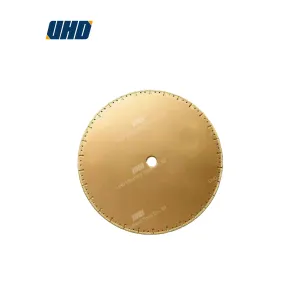
A vacuum-brazed diamond tool is a superhard material tool in which diamond abrasive particles are fixed to the working surface through a brazed bonding process carried out under vacuum conditions. This construction is designed to create a firm connection between the abrasive and the tool body while preserving the exposed cutting or grinding action of the diamond.
Compared with a tool concept based only on the presence of diamond abrasives, a vacuum-brazed design requires evaluation of the complete working system: abrasive quality, bonding interface, abrasive distribution, tool geometry, substrate, and intended machining application.
Abrasive characteristics affect cutting sharpness, contact behavior, wear development, and the tool’s suitability for a specific workpiece.
The bonding interface influences how securely abrasive particles are retained and how consistently the working layer performs.
Tool geometry, abrasive arrangement, working-layer design, and tool-body compatibility affect contact stability and process control.
Speed, feed, depth of cut, cooling, and workpiece conditions influence heat, cutting load, wear, and processing stability.
| Evaluation factor | Primary role | Practical consideration |
|---|---|---|
| Diamond abrasive characteristics | Support the cutting or grinding action of the tool. | Match abrasive characteristics with the workpiece, application, and required surface interaction. |
| Vacuum-brazed bond | Retain diamond abrasives on the working surface. | Consider bond integrity, abrasive exposure, and consistency across the working area. |
| Tool structure | Provide the contact geometry and mechanical foundation for machining. | Review geometry, dimensions, abrasive placement, and compatibility with the equipment. |
| Machining parameters | Determine the actual load and thermal conditions during use. | Adjust operating conditions according to material response, tool behavior, and process requirements. |
The purpose of vacuum brazing is to form a controlled bonding interface between the diamond abrasives and the tool body. A suitable bond helps maintain abrasive retention during machining, while the exposed diamond provides the working cutting edge or grinding contact. This balance is important because excessive retention loss may shorten usable tool life, while an unsuitable structure may limit cutting sharpness or interfere with chip and debris removal.
In practice, vacuum-brazed diamond tools should therefore be assessed through the combined indicators of sharpness, bond strength, wear resistance, and processing stability. These indicators are interdependent rather than isolated. For example, changes in abrasive exposure or bonding behavior can influence cutting load, heat generation, and the development of wear during operation.
Vacuum-brazed diamond tools are relevant to industrial machining applications where the combination of diamond abrasives and a securely bonded working layer is required. UHD’s superhard material tool portfolio is developed for professional users in industrial markets, including metalworking and stone-processing contexts.
A reliable tool selection process depends on complete technical information. When discussing a vacuum-brazed diamond tool, industrial buyers should provide the intended application, workpiece material, tool dimensions, equipment specifications, operating parameters, cooling conditions, and the main performance concern. This information helps suppliers evaluate the relationship between abrasive characteristics, bond strength, tool structure, and machining conditions.
Selection principle: the most suitable vacuum-brazed diamond tool is determined by the complete machining requirement, not by a single tool feature viewed in isolation.
UHD Ultrahard Tools Co., Ltd. develops and supplies superhard material tools, diamond tools, abrasives, and customized vacuum-brazed diamond abrasive solutions for B2B industrial customers. With a focus on quality, application-oriented product positioning, and technical cooperation, UHD supports professional evaluation of diamond tools for different machining requirements.


.png?x-oss-process=image/resize,m_fill,h_300,w_300/format,webp)

 260
|
260
|
 UHD Ultrahard Tools Co., Ltd
industrial tool procurement
supplier evaluation
superhard material solutions
B2B purchasing decision
UHD Ultrahard Tools Co., Ltd
industrial tool procurement
supplier evaluation
superhard material solutions
B2B purchasing decision
 174
|
UHD Ultrahard Tools Co., Ltd
diamond tool selection
industrial processing tools
material properties
process requirements
211
|
UHD Ultrahard Tools
ultrahard material tools selection
working condition matching
material hardness
industrial cutting
174
|
UHD Ultrahard Tools Co., Ltd
diamond tool selection
industrial processing tools
material properties
process requirements
211
|
UHD Ultrahard Tools
ultrahard material tools selection
working condition matching
material hardness
industrial cutting
 418
|
UHD
vacuum brazed diamond abrasives
metalworking case study
cutting stability
processing efficiency
333
|
UHD Ultrahard Tools
diamond tool misconceptions
ultrahard material selection
tool hardness
industrial machining applications
418
|
UHD
vacuum brazed diamond abrasives
metalworking case study
cutting stability
processing efficiency
333
|
UHD Ultrahard Tools
diamond tool misconceptions
ultrahard material selection
tool hardness
industrial machining applications