Vacuum-brazed diamond cutting abrasive is a superhard material tool in which diamond abrasive particles are firmly bonded to a tool substrate through a vacuum brazing process. The technology is used to develop durable cutting and grinding solutions for demanding industrial applications, including metalworking and stone processing.
UHD Ultrahard Tools develops vacuum-brazed diamond tools with a focus on abrasive retention, processing efficiency, tool life, and application compatibility. This page explains the basic structure, key characteristics, differences from conventional electroplated diamond abrasives, and the main factors to consider when selecting a tool.
The tool consists of a shaped substrate, a brazed bonding layer, and diamond abrasive particles positioned on the working surface. During vacuum brazing, the bonding process helps secure the diamond particles to the substrate and supports a stable abrasive interface.
The final tool geometry, abrasive arrangement, dimensions, and working speed should be selected according to the equipment, workpiece material, and required process result.
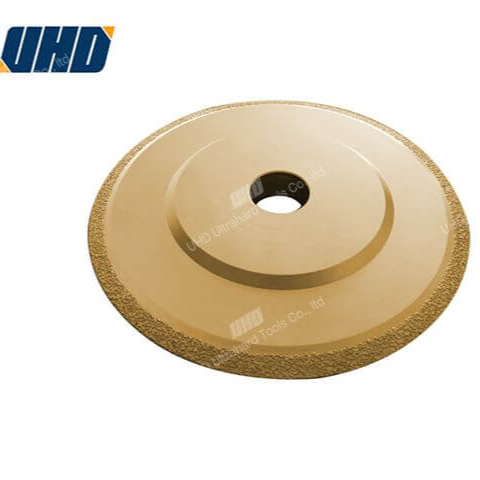
Vacuum brazing helps hold diamond particles securely on the working surface, supporting wear resistance and extended service life.
The abrasive structure is designed to support efficient material removal and help reduce processing time in suitable applications.
Selected vacuum-brazed diamond wheels can be used with complex multi-axis automatic grinding equipment for repeatable processing.
Different dimensions, working geometries, and abrasive configurations can be considered for equipment compatibility and process requirements.
Vacuum-brazed diamond tools are often evaluated as an alternative to conventional electroplated diamond abrasives. The appropriate choice depends on the workpiece, equipment, operating conditions, and required tool performance.
| Evaluation area | Vacuum-brazed diamond abrasive | Conventional electroplated abrasive |
|---|---|---|
| Abrasive retention | Diamond particles are secured through a brazed bonding interface. | Diamond particles are held by an electroplated metal layer. |
| Tool selection | Can be configured around specific geometries, dimensions, and automated equipment requirements. | Selection is based on the available plated tool design and process compatibility. |
| Typical evaluation focus | Abrasive efficiency, wear resistance, tool life, and process stability. | Initial tool design, exposed abrasive, and suitability for the intended operation. |
Vacuum-brazed diamond grinding wheels can support automated grinding operations for suitable metal and cast iron components where high precision and stable abrasive performance are required.
Diamond abrasive tools are also relevant to stone processing applications that require a superhard abrasive capable of working with hard materials.
For multi-axis automatic grinding, wheel dimensions and working geometry should be matched carefully with the machine, tool path, and component profile.
UHD Ultrahard Tools supplies vacuum-brazed diamond grinding wheels designed for automatic grinding equipment. The product range includes UDW455, UDW405, UDW355, UDW305, and UDW255 sizes, with selection based on operating speed, equipment compatibility, and application requirements.
The wheels are intended to provide a durable abrasive solution for applicable metalworking processes and can be considered where users are evaluating alternatives to traditional electroplated diamond grinding wheels.
Important: Tool performance depends on the specific workpiece, machine, operating parameters, and process conditions. Product selection should be confirmed against the intended application before production use.
With experience in superhard material tools and B2B industrial supply, UHD Ultrahard Tools provides product information, specification guidance, and application-oriented technical support for vacuum-brazed diamond abrasive solutions. Contact UHD to discuss your equipment, workpiece, dimensions, and customization requirements.


.png?x-oss-process=image/resize,m_fill,h_300,w_300/format,webp)
.png?x-oss-process=image/resize,m_fill,h_300,w_300/format,webp)

 490
|
490
|
 UHD Ultrahard Tools ultrahard materials solutions diamond tool supplier customized service B2B industrial procurement
235
|
UHD Ultrahard Tools Co., Ltd vacuum-brazed diamond abrasives diamond abrasives bond strength supplier evaluation
442
|
UHD Ultrahard Tools Co., Ltd diamond tool purchasing vacuum-brazed diamond tools tool service life machining efficiency
373
|
UHD Ultrahard Tools superabrasive tool procurement technical requirements checklist custom diamond tools industrial purchasing
370
|
UHD Ultrahard Tools Co., Ltd. vacuum brazing process diamond abrasives tool bond strength machining performance
UHD Ultrahard Tools ultrahard materials solutions diamond tool supplier customized service B2B industrial procurement
235
|
UHD Ultrahard Tools Co., Ltd vacuum-brazed diamond abrasives diamond abrasives bond strength supplier evaluation
442
|
UHD Ultrahard Tools Co., Ltd diamond tool purchasing vacuum-brazed diamond tools tool service life machining efficiency
373
|
UHD Ultrahard Tools superabrasive tool procurement technical requirements checklist custom diamond tools industrial purchasing
370
|
UHD Ultrahard Tools Co., Ltd. vacuum brazing process diamond abrasives tool bond strength machining performance